Showing posts with label photography workshop. Show all posts

Friday, May 27, 2016

Eastern Sierra Conditions Spring 2016


The aspen trees are starting to leaf out
My early May blog post on spring Eastern Sierra conditions contained a collection of possible outcomes and opportunities for spring.  I've been out a few times since then, checking the emergence status of various wildflowers, the water level at Mono Lake tufa sites (and their muddiness, since they form over springs), unpaved road access conditions, snow levels and lake iceout conditions around Tioga Pass, pond water levels and reflection opportunities in Yosemite's Tuolumne Meadows, bird and wildlife photography opportunities, and so on.

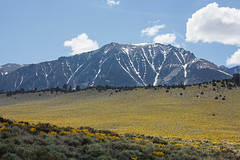
A quick snapshot on my iPhone 6S+ - good enough to show the arrowleaf balsamroot starting to bloom

Wildflowers vary in intensity and timing from year to year, which is why I do these scouting trips before the workshop, and not while dragging customers around.  Even knowing where various species can be prolific, checking the current year's status and timing involves many less than fully productive searches.  Wild iris seemed to be a bit behind in timing.  Mules ears have been starting to emerge over the past 2 weeks, and could peak in the next week or two.  The few days of clearer, warmer weather in the forecast early next week could help them along.  Paintbrush was doing well at low elevations but it is too early to tell how prolific it'll be at mid to high altitudes.  Lupine were healthy in some areas and should still be available for another week or more a lower altitudes, and emerging at mid altitudes.  Wild peach has been strong, and yellow bitterbrush has bloomed as enthusiastically as many local residents can remember (one even mentioned that this native must be a new invasive species), but the peak is now past for both.  Isolated patches offered a variety of other species, sometimes dense, but you really have to search for them.  I'll be back out over the next few days to see if some of the patches have increased in intensity, enough to warrant a visit during the upcoming workshop.

All of the photos in this post are from May 2016


The weather has been unsettled, great for daytime photography as but less conducive for many types of night photography.  That's pretty typical for May, which is one reason why I only ran a couple of Bodie night photography workshops then, but currently focus more on June and later.

Some locations are on the wet and muddy side, not unsurprising for spring, but certainly good to know before you show up for a sunrise or sunset and can't access the compositions that you might have enjoyed in the past, in summer, fall, or simply a drier year.  In other cases, a site might be more dependent upon long term trends, and the long term drought continues to provide cracked earth foregrounds.  If you're shooting in one basin and the weather and light looks like it might be better 25 miles north or south, you can save an hour of driving if you know that the site that you have in mind isn't in great condition that week.  Conversely, you can make your day, week or month if you know that a site is in great shape, and you arrive to find great light to complement the site's full potential.  A good workshop is made great when you can "connect the dots" to consistently arrive at a series of good sites, in great seasonal condition, offering optimal lighting, while reacting to the day's weather conditions.  There are no guarantees in landscape photography, and that's part of what makes it exciting, but scouting trips do resolve what would otherwise be unknowns in the mix, increasing the odds of everything coming together just right.

A quick iPhone snapshot is good enough to record conditions, break out the DSLR upon returning in better light


The somewhat early opening of Tioga Pass is not surprising given a fairly dry month of February and the winter's overall normal to low snowpack (93% in the Mammoth lakes area, closer to 100% north of Tioga Pass).  It has re-closed at times as moisture causes afternoon and evening storms, but it's open again now.  Lakes are in various stages of losing their ice.  Tenaya Lake was clear by the time the pass opened, Ellery may be completely clear now, Tioga was mostly frozen last week, so it may still hold some ice into next week.  The terrain is complicated up in that area, so having spent many sunrises and sunsets up in that area is important to knowing what is likely to be productive, vs. a bust.

Tuolumne Meadows currently offers a lot of seasonal ponds.  Determining ahead of time which of them provide decent compositions at current water levels helps keep the workshop moving efficiently.  Many workshop leaders spend a lot of time and money marketing, and do a great job filling their workshops.  Good for them.  I prefer to spend my time in the field, develop extensive site and condition knowledge, and over time earn the reputation for delivering great opportunities and results.

It's important to me for my knowledge to include photographic technique and post-processing skill.  Anyone can apply a filter in post-processing software or use a certain technique to make a landscape look wacky, and there's nothing whatsoever wrong with that, it it's the style someone chooses, rather than is trapped into through less than optimal exposure technique or lack of alternate post-processing workflow options.  Getting through the end-to-end digital photographic process with realistic results is like walking a tightrope: bay far the easiest thing to do is to fall off.  There are subtle things you can do all along the way to optimize results.  You don't need the latest camera or software, it's more about fine tuning the various steps.
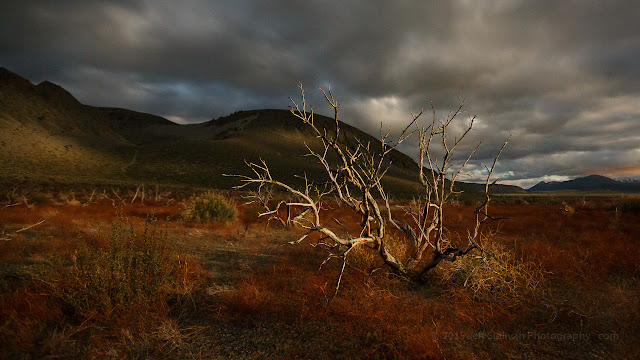
Backlit storm clouds at night


Ansel Adams produced timeless results by producing heavily manipulated but seamlessly realistic results, while popular trends included hand-tinting photographs to add color.  Most of us don't know the names of his contemporaries today.  No doubt Ansel could have had great commercial success producing those colorized postcards, but any era's hot trends can look cartoonish years later, out of the unique social context of the time.  We're not immune from that today: I have over-saturated digital photos from the mid-2000s, tonemapped HDRs from the late 2000s, and I've dabbled with luminance masking, color light painting, and lately software filters.  I gravitate more realistic results, and for the experiments with various trends, I'm gradually re-processing many of the more over-the-top post processing results.  It's useful to try a range of things to settle on your own preferred style, and to continue to try new things for variety and to see if you want to broaden your options for post-processing any given scene in the future.  So I want to maintain a broad enough collection of experiences to be prepared to help photographers who want to expand their own skills.

While the goal of my pre-workshop explorations are mainly to visit locations to assess conditions, it'll be a fun challenge to line up the sites for great light and weather during the workshop next week.

iPhone 6S+ panorama


With the storms in the past weeks I haven't been out for night photography as much as I would like, but we should have a great time in Bodie June 4/5, and I hope to be out a few times in the coming nights to assess a few new locations as well.

Starry Night over Bodie Church

Friday, May 13, 2016

Eastern Sierra Photography Workshop in June: What's in Store?


“The Traveler sees what he sees. The Tourist sees what he has come to see.” G.K. Chesterton

Eastern Sierra Mules EarsI can only be in one place at a time, so I have to be efficient and pack as much opportunity as I can into my time in the field. Every day has the sun rising and setting. Some weeks have wildflowers. Fall colors may be peaking in a given location for only a few days to a week. The Milky Way is available during a few weeks of the year, a moon rise at sunset or moon set at sunrise about a dozen times each. So I pick a prime season, the most likely peak days and times.

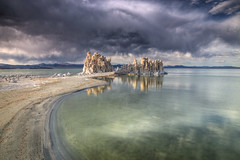
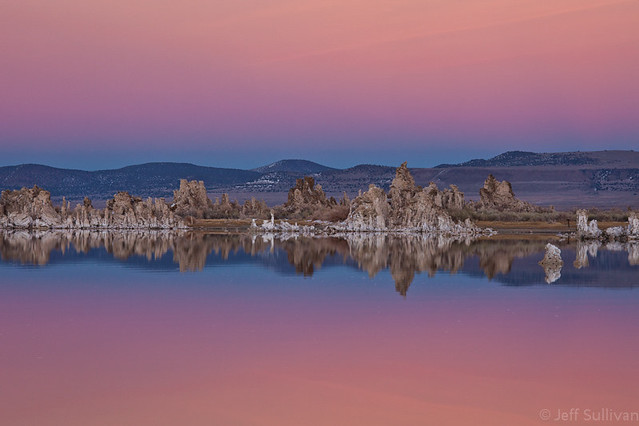
Storm Over Mono LakeWorkshops take me out of the field as I work on permits, itineraries, write descriptions, set up payment / registration buttons, and I perform a some kind of marketing to get them seen, if only a mention or two on social media. I'm not going for volume, and I personally lead all of my workshops, so they are designed to place you in a stunning place, in a peak season, as the exact best time.

The first week of June is amazing for the Eastern Sierra for so many reasons. Some snow remains on the Sierra Nevada (and possibly the White Mountains) to catch alpenglow, and there can be a fresh snowfall around the end of May to refresh that surface. Several species of wildflowers are starting to bloom, profusely in some areas.

This year the new moon and Milky Way shooting timing coincides with this week, and we have the possibility of a late spring storm from the northwest for interesting sunrises and sunsets, or warmer monsoon moisture from the Baja coast that could bring dramatic afternoon clouds, showers and rainbows, or evening thunderstorms.

I used to be nervous about the thunderstorms interfering with night photography, but I've learned through experience in Bodie and the surrounding area that convection-driven storms tend to break up or blow east by the time the sky is fully dark around 10/10:20, so they're really just bonuses for sunset and twilight shooting, even when rain showers interfere locally for an hour or so (and even then they often give way to rainbows).

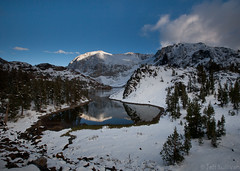
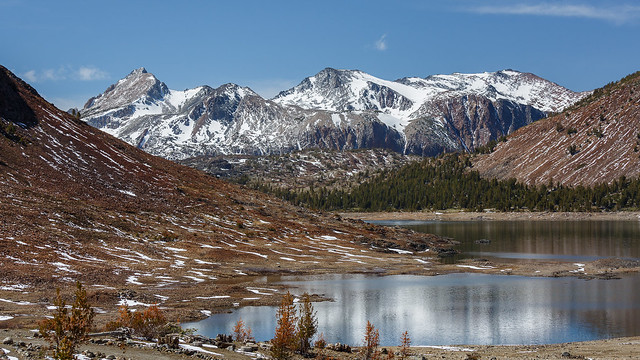
Fresh Snowfall at Ellery LakeTioga Pass may have just opened and we may have interesting iceout conditions on the lakes. More often than not the pass opens in May, so with 89% snowpack, the odds are good for a normal, mid to late May opening. It seems like they often try to wrap up whatever road maintenance is needed in time for an opening for Memorial Day weekend, so I'm going to guess Friday at noon as the official time, but cars line up early and they often let them in around 9 am.

We'll start with a sunrise on Thursday, pursue wildflowers and weather during the day, have an early dinner, and head back out for sunset at Mono Lake.

Entering the Earth's Shadow

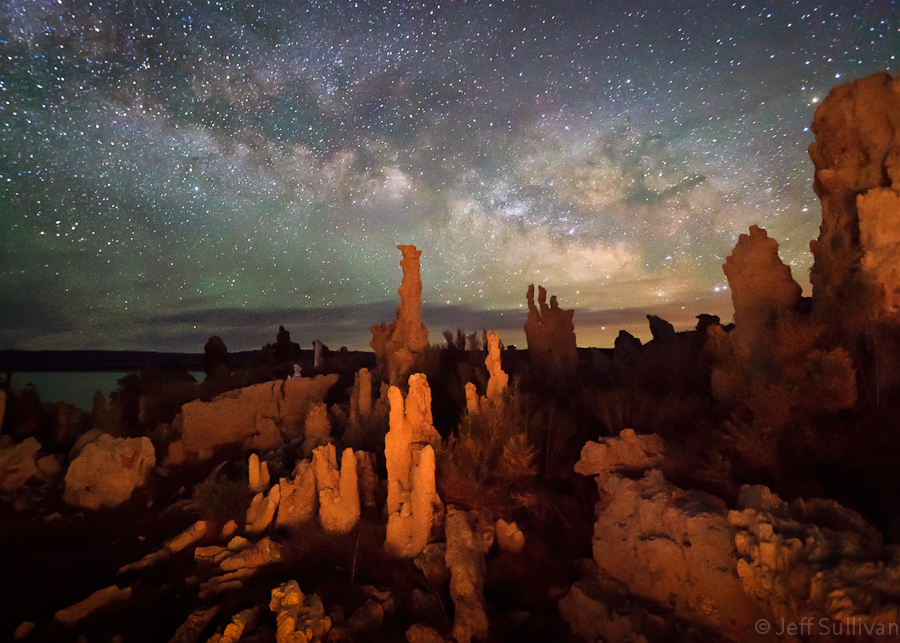
We'll pick from a number of spots for Milky Way shooting, and arrive by the time it's fully dark at 10:07, when the galactic center of the Milky Way has already risen 6 degrees, perfect for placing it in our compositions.

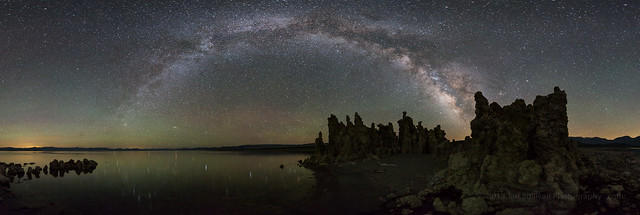
Mono Lake Milky Way Panorama

Friday we'll catch sunrise at Mono Lake before the weekend crowds arrive, shoot different wildflowers, maybe explore some interesting geology or head up to Tioga Pass if its open for snowier views. Another sunset spot, More night photography, and turn in not too late since most of us are continuing on to Bodie the following night, and Bodie interiors the following morning.

Eastern Sierra Wild Iris

Plans are all well and good; I frequently plan something as simple as a sunset moon rise composition weeks in advance.  But landscape photography is about light, so if you're on a workshop, you want a leader have enough depth in detailed regional knowledge to be ready to ditch all plans and react to the weather and light if there's more potential 20 or 30 miles from where you are.  So leave the tourists behind who are stuck to their fixed agenda, and rather than a traveler who reacts to the weather and looks for a place to shoot it, you can travel with a local who knows the opportunities in every direction, and anticipates the conditions before you pick the next destination and hop in the car to arrive there just in time.

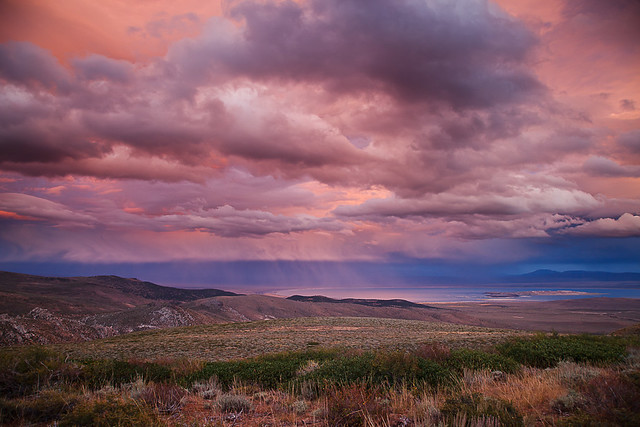
Sunset Rain Clouds Over Mono LakeEarly June in the Eastern Sierra offers an annual convergence of so many factors which could make photography conditions stunning.  Photography is more fun shared, so I can't wait, and all the better that I get to share all of this bounty with old and new friends!

Spring is Coming to the High Sierra!

Most of the participants are returning customers, but we have room for one or two more if anyone's interested!

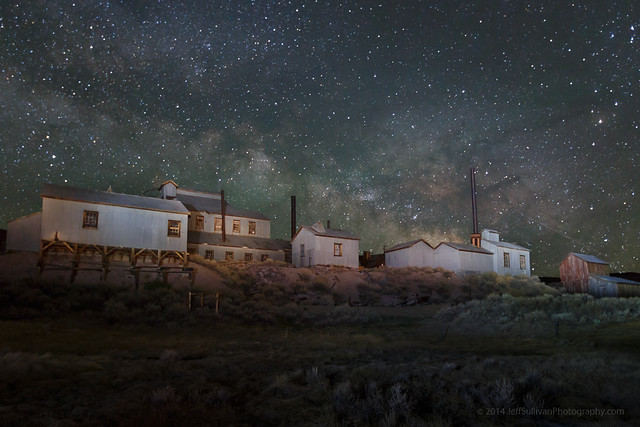
Bodie's Standard Mill

Milky Way Arch Over Standard Mill

Connect with or contact me in all of the usual places for photographers: Flickr, Facebook, Instagram, Twitter, Google+YouTube, 500px, Tumblr, or my Web site.

Thursday, June 11, 2015

Exploring a Ghost Town at Night: May 24

Main Street Bodie under moonlit clouds
After our last sunrise and interior access session at the old mining ghost town of Bodie State Historic Park on Memorial Day Weekend, we headed out for lunch and rest before we'd return at 6 pm for sunset and night access.  The park isn't open at night, but we had an arrangement with the Bodie Foundation to provide funds for the park's preservation of buildings in "arrested decay", so they provided monitors to accompany us around town after hours.  

Rain showers were moving through the area throughout the afternoon, and we had varying degrees of cloud cover for our first two hours in the park. At 7 pm big, puffy clouds looked like they'd let some sunset light through about an hour later.

At 8 pm however, it started to rain.  Hard.  This was right when we should be out shooting sunset, but we had to take cover in a meeting room.  We watched an informative video on Bodie, but that wasn't what we were there for, so watched to see if the rain would subside.

Fortunately Bodie is located in a high desert ecosystem, and much of the 0.7 inch average precipitation for May falls in a storm or two, like the one the night before.  Other rain events are just a passing shower, and the cloud which had dumped on us had moved on by 9, and we went back out for amazing blue hour light.  The clouds were still moving fast, and they blurred in the sky as we set our cameras for 30 second exposures at Bodie's Methodist church, built in 1883.  There wasn't much light on the landscape, but a little light painting on the church helped that show up nicely. 

The moon was nearly a quarter moon, so as the clouds began to break up, it was backlighting them as the stars started to peek through.  We went to Bodie's classic, rusty 1937 Chevy and did some light painting to give it a little extra character in the moonlight.  People say that it may be the most photographed car in the world.  It is certainly the one that I have photographed the most!  The clouds started to break up as we were shooting the Chevy, so we decided to go see how conditions were after the rain down on Main Street.

We walked down Green Street to Main Street, and found that the puddles we had seen earlier in the day had been refreshed by the passing storm.  You don't find standing water in the high desert very often, and it doesn't last long, so we were lucky to have just followed a passing storm, twice now in the same day!

We captured a variety of buildings in various puddles, and the sky gradually cleared and showed more stars as the moon neared the horizon.  We moved to capture the green truck downtown, which I understand is a 1940 Ford commercial vehicle, before starting to head back towards our gear and our vehicles.  With the moon now out of the sky, many of the participants had time for one last shot of the Milky Way by the mining headframe up by the parking lot before we hit the road.

Having started the drive to Bodie at 3:30 am to get there by 5, I had some coffee at 10 pm to keep energized, but now I was too tired to sleep, so I just drove home, arriving around 2:30, 23 hours after I had left.  


It was a long day, but we enjoyed two of the best and most interesting special access sessions that I've experienced, in the 20+ that we've arranged over the past 4 years.  They just keep getting better the more we do it.  I can't wait for the four more dates we have scheduled in Bodie from June through October this year!

I didn't have room to include all of the photos that I wanted to show you in this blog post, so I'll be publishing more via DripThat, a new app and community which facilitates the telling of stories through pictures, video and text.  You can find the DripThat app in the Apple App Store (http://bit.ly/1dhaequ), and you can connect with me in the community to see more of my photos from my road trips: https://dripthat.com/pr?id=jeffsullivan

Shooting Bodie's Wheaton & Hollis Hotel and reflection

This information is on behalf of dripthat.

Saturday, May 23, 2015

A Photo Workshop Day and Night in Bodie

Pre-dawn light at the bullwheel
First light on Main Street
The California Gold Rush was started by the discovery of gold at Sutter's Mill in 1848.  In 1959 W. S. Bodey discovered gold east of the Sierra Nevada, and the rest is history.  Fortunately we can explore that history due to local families preserving the town until it became Bodie State Historic Park in 1962.  This authentic Wild West ghost town town is preserved in a state of "arrested decay", and the interiors of the buildings have been left largely untouched for over 50 years.

So what's a photography workshop in Bodie like?  Let's go through the approximate schedule for this coming Sunday.  This will be our first one where doing interiors in the morning and night access that same night, so we'll give everyone a card-clearing, battery charging siesta from roughly 1-4 pm.

The temperature is forecast to be 35 when we arrive, with:
"A slight chance of showers, then a chance of showers and thunderstorms after 11am. Partly sunny, with a high near 53. North wind 5 to 10 mph. Chance of precipitation is 30%."


4:45 am - Turn up Bodie Road where it meets Hwy 395.  Don't be late (watch for deer).

5:15 am sharp - Meet at gate, south end of town. Sunset sky color may be underway!

5:39 am - theoretical sunrise time in Bodie (zero degree horizon).

We'll start to enter buildings as soon as it's light enough: Boone General Store, Wheaton & Hollis Hotel, Sam Leon Bar & barber shop, Lottie Johl House, morgue, shoolhouse, Dechambau Hotel, IOOF Hall, and various residences as time permits.  Our record so far is 14 buildings.  Sample interior photos.

6:00 am - sunlight gradually reaches the buildings as the sun bathes them with golden hour light.  Divide your time in and out of buildings.

6:40 am - end of the best golden hour light.

9:00 am - the public enters the park.

11:52 am - moonrise, 41% full (we won't see it for another 20 minutes).

12:00 noon - end of interior access.

--------

Virginia Creek Settlement
12:12 pm - 41% crescent moon becomes visible over Bodie Bluff from town (approximate time).  Look for it to the left / north of the Standard Mill from the headframe by the parking lot.


1 - 4 pm - take a break, take a nap, get off your feet to rest for the night session!

--------

4:30 - 5:30 pm - optional dinner  at Virginia Creek Settlement restaurant, just north of Bodie Road, to discuss your experience, goals, gear, techniques.

Bring a waterproof layer with you back to Bodie, just in case:
"A 30 percent chance of showers and thunderstorms before 11pm. Partly cloudy, with a low around 38. North wind 5 to 10 mph."
With 10 MPH winds, 38 would feel like 28, so bring a warm hat and gloves!


5:30 pm - turn up Bodie Road where it meets Hwy 395.

6:00 pm - meet at front gate, then we'll park, move gear to a meeting room, have a quick safety talk, then go shoot.  Sample Bodie night photos.

7:00 pm - the golden hour light will only get better until it leaves town around 7:45.

7:45 pm - approximate last direct sunlight in town.

8:07 pm - sunset time in Bodie (zero degree horizon).

8:27 pm - best sunset sky color in Bodie, give or take a few minutes

Enjoy blue hour light until 9:10 or so.  If some of the clouds stick around from the afternoon, blue hour may be spectacular.

Late blue hour with moonlight
9:10 pm - blue hour ends, switch to night lens / clothing, get lights, snacks, hydrate.

9:58 pm - end of astronomical twilight, sky fully dark

Shoot star trails, light painting, night panoramas, Camelopardalid meteor shower (weak).

Comet Lovejoy will be near the North Star Polaris on this night, so we might not need star-tracking mounts to catch a shot of it with a long lens!  The sky hasn't been clear this week for me to see how bright (or dim) it is, but we'll know where to find it quickly.

Iridium flare
10:25:31 pm  Iridium flare - 272 degrees (west) , 11 degrees elevation, we'll see a flash as the Iridium satellite #70 passes.

12:54 am - moonlight leaves town (approximate) as moon dips below hills.

1:00 am exit park (watch for deer on the drive out).

--------

1:14 am theoretical moon set time in Bodie (zero degree horizon).  (The Milky Way will become more visible, but if you want a parting shot, you'll have to catch it from outside of the park land.)

It's going to be a long day, but we should have a lot of great photographic opportunities!

Light Painting in Bodie in the moonlight.
More information on our Bodie workshops... dates and prices: http://www.jeffsullivanphotography.com/blog/bodie-night-photography-workshops/

Friday, April 17, 2015

Registration Opens for May 24 Bodie Night or Interior Workshops

Light painting in Bodie with partial monlight
Our first of five special access workshops in Bodie State Historic Park in 2015 is coming up in only 5 weeks!

We open registration for our Bodie workshops bundled with both night photography instruction and morning interior access first, since we'd hate to turn away anyone who want wants both simply because one or the other filled up.  Not everyone wants both however, so as space permits we sometimes are able to offer separate registration for the morning or evening session separately.

So if you'd like interior or night access to Bodie at a lower cost than both together, you can join us on May 24 as follows:

     May 24 interior access (approximately 5:30 am - noon) $245: 
     https://www.paypal.com/cgi-bin/webscr?cmd=_s-xclick&hosted_button_id=RCQZ356GBZU2N

     May 24 night photography workshop only (approximately 6 pm - 1 am) $325: 
     https://www.paypal.com/cgi-bin/webscr?cmd=_s-xclick&hosted_button_id=D34XKVKWDQNAJ


For more details on the workshops, including frequently asked questions on our workshops, visit this page on my Web site:

     Bodie Night Photography Workshops     
     http://www.jeffsullivanphotography.com/blog/bodie-night-photography-workshops/

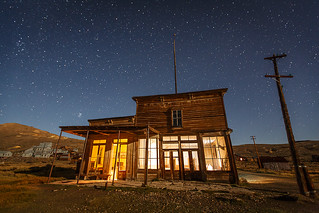
Wheaton & Hollis Hotel  in the Moonlight
Wheaton & Hollis Hotel
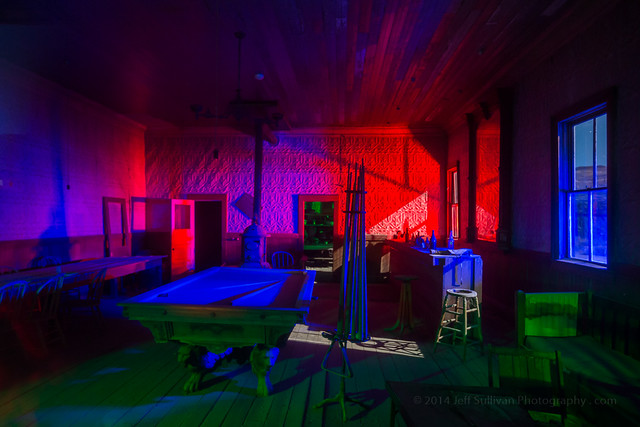
On May 24 the moon will set around 1 am as we're leaving the park, and it will be roughly a "first quarter" moon, 50% full.  This will be good for capturing the town well lit at night, bur it's not so bright that we can't add light of our own as well.  In addition to the lights I've been using for years, I recently bought a ProtoMachines LED2 for its range of colors as well as its fine control over intensity.  I've already taken it out for a week in March, and I'll be out practicing with it more in April and May as well.  For more examples of what Bodie is like with moonlight, here's an album on Flickr showing some past visits:

     Bodie Under Moonlight
     https://www.flickr.com/photos/jeffreysullivan/sets/72157646890561079/

Inside the Lottie Johl House
For interior access we enter as many buildings as we have time for.  On our last workshop in 2014, the ten photographers with us worked fast and entered 14 buildings!  I've found over the past few years that a tripod can be handy for the darkest rooms where I might want to use long exposures and/or exposure bracketing, but I like the fine composition control of shooting with the camera in hand.  To further extend the handheld concept, I can hold my iPhone in places and ways that would not be practical with a heavy DSLR, so some of my favorite shots now come from those low or creative angles.  You can see 100+ examples of Bodie interiors in an album here:

     Bodie Interiors 
     https://www.flickr.com/photos/jeffreysullivan/sets/72157634013024369/

Sunset in Bodie during a night photography workshop
Of course golden hour, sunrises and sunsets are not to be missed, so a general album of roughly 300 photos from the park is worth browsing as well:

     Bodie State Historic Park

It's difficult to say whether we'll be able to open up separate registration for other nights or interior sessions in 2015, it all depends upon how registration goes as the dates approach.  But I can say that May 24 is the only moonlit night we'll be in Bodie this year.  Most of the other night we have booked are on moonlit nights, so we can make the most of the Milky Way.

One tradeoff between the moonless and moonlit nights is that star trail shots may arguably be better with some moonlight, so the sky isn't completely filled with the vortex of stars.

Now in our fourth season, we're averaging 5 night workshops and 3 interior access workshops per year in Bodie. We've experienced multiple workshops in every month from May through October, with the moon in various phases and compass directions.  We'll help you make the most out of your time in Bodie!

If you're interested in both the night and interior workshops together on May 24 with a small price break, or one of our other dates in 2015, visit our main Bodie Photography Workshops page for information and to register.

Colorful Light Painting in the Wheaton & Hollis Hotel