Showing posts with label travel. Show all posts

Friday, September 28, 2018

Oregon Coast Photography Tour September 2018

Oregon Coast dunes at sunset, September 2018.
I just completed a 2000-mile trip to revisit some of my favorite places in Oregon. Although I lived in Oregon for years in the 1980s and revisited a lot in the mid to late 2000s, I hadn't been to some of these places in years. Even with 2+ weeks it wasn't enough time, so I'll just have to go back soon!

I don't know when I'll get around to uploading all of my photos from my recent Oregon Coast photography tour, but here are a few images that I've uploaded so far.

What's your favorite place along the Oregon Coast?

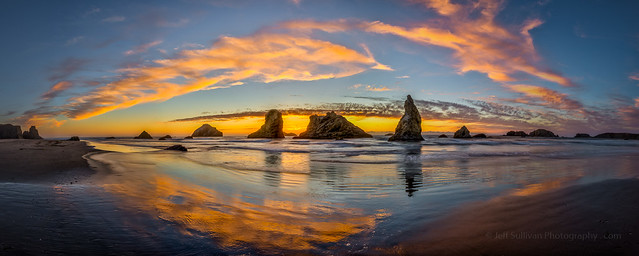
Bandon Sunset Panorama

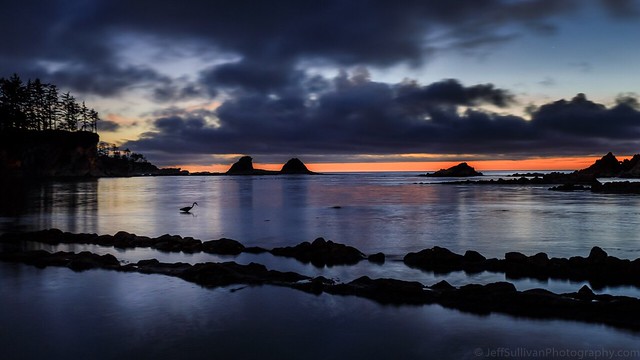
Twilight Hunt

Oregon Coast Sunset

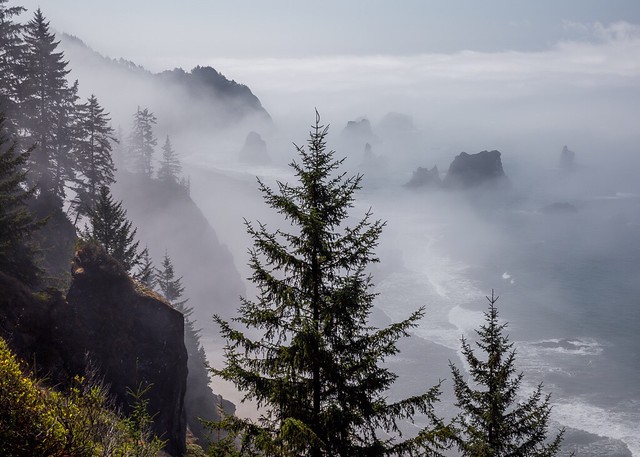
Samuel H. Boardman Scenic Corridor, Oregon

Tangerine Sunset on the Oregon Coast

Friday, February 16, 2018

Analysis of a Lunar Eclipse Shoot

I'll be presenting in Woodland, California next Tuesday, February 20 at 7 pm in case you might like to attend. The Woodland Camera Forum meets in Norton Hall, 70 Cottonwood Street, Woodland, California: www.davisenterprise.com/arts/jeff-sullivan-presents-work-at-photography-group/

The formatting of this post got all messed up when i tried to transfer it form my original Wordpress blog post on my Web site here: http://www.jeffsullivanphotography.com/blog/2018/02/08/lunar-eclipse-photography-january-31/
I'll fix it as time permits, which might not be a while, so best if you read it over there for now!
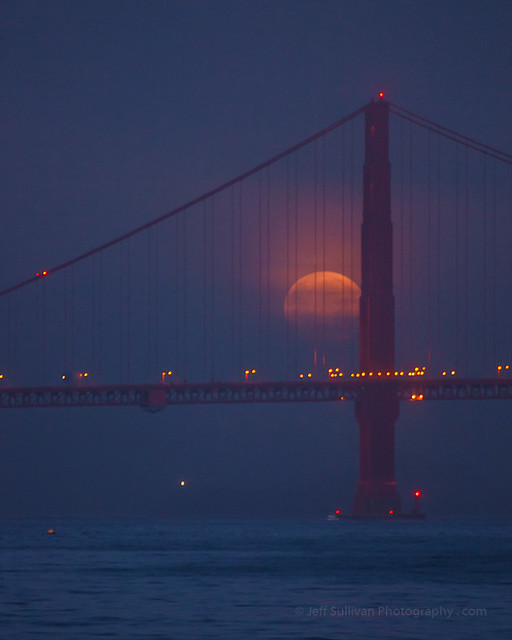
Lunar Eclipse Teed Up Do You Have Plans to Shoot The Blue Moon This Month?

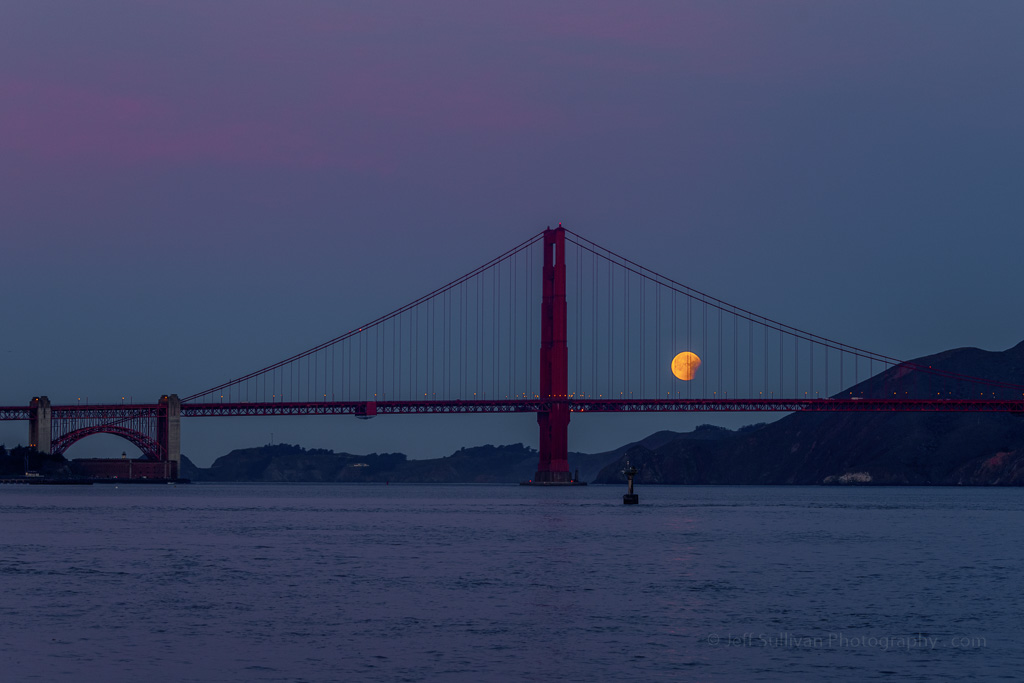
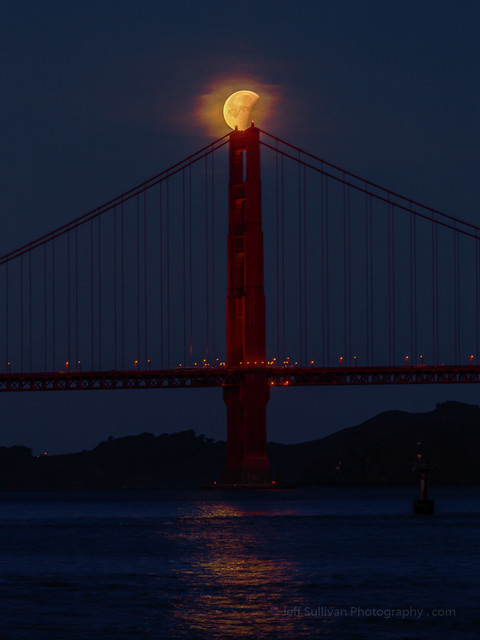
For the January 31, 2018 lunar eclipse, my planning started weeks in advance, looking at the timing of the eclipse, the direction of the moon, and at prior shots like the moon set above from 2010 that seemed like a good concept to re-shoot with a moon in some phase of eclipse.  I decided to try to place the moon on top of the South Tower of the bridge, worked out the geometry to estimate the moon's elevation, looked in an app to determine its compass direction at that time, and where I should stand.

 So after you decide to shoot an early morning lunar eclipse, what's the next logical thing to do? Pick a spot for the prior sunset of course. Marin County's Rodeo Beach fit the bill nicely for a relaxing sunset.
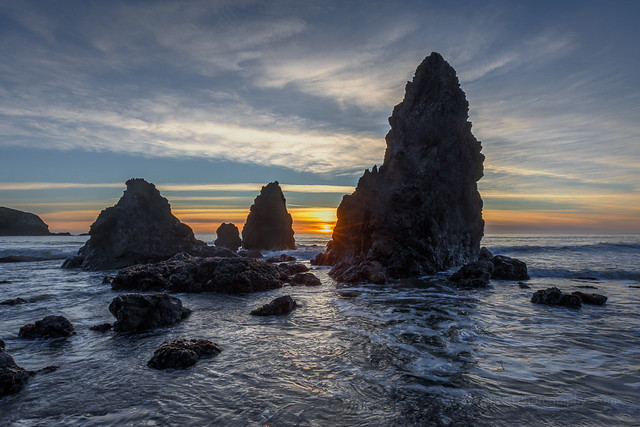
Pacific Sunset  A trip to Japan Center for sushi later, and it's too early for sleep, so a little night photography along the San Francisco waterfront helps put a few more travel images on the card and burn off a few dinner calories.
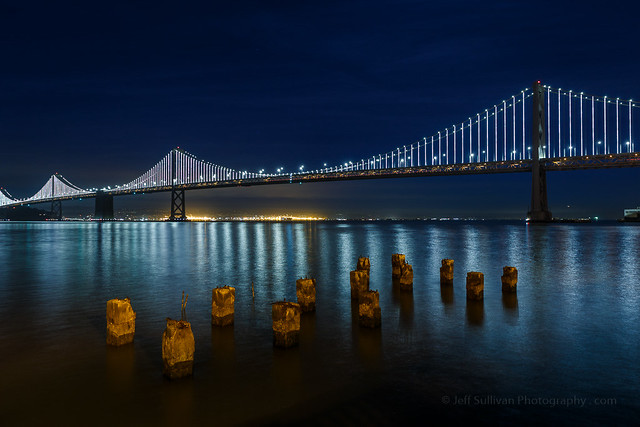
Bay Bridge at Night 

Wake up at 3am, and go get a nice moon shot from the Crissy Field area: Total Lunar Eclipse January 31, 2018
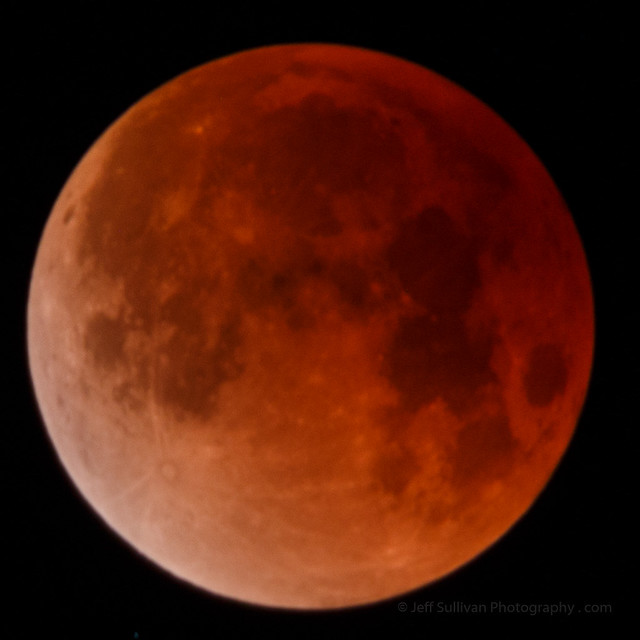
This image was exposed for 15 seconds at f/8, ISO 200 on a Canon EOS 70D with a lens at 381mm using a Canon 70-200mm f/4 IS L Series lens plus EF 2X III teleconverter. After the APS-C crop factor, the equivalent focal length was 610mm! The camera setup was on an iOptron SkyTracker, so the longest exposures in the sequences I was shooting could easily be 15 to 20 seconds at ISO 200. What next? You've chosen the spot anticipating the moon approaching the Golden Gate Bridge, so when it's close enough you can include the bridge in compositions:
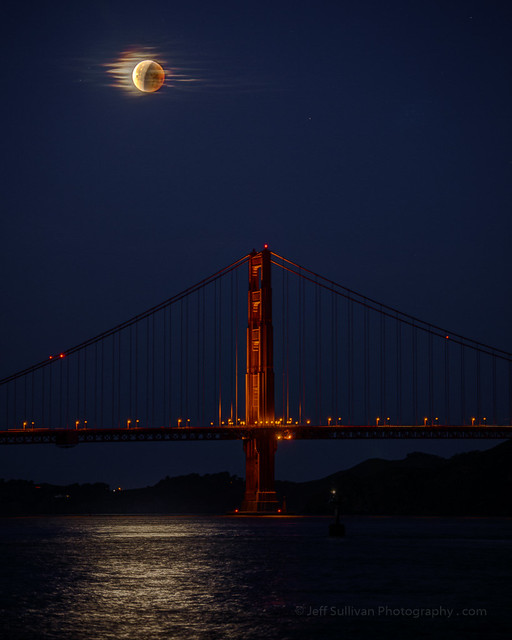
  Lunar Eclipse Over the Golden Gate Bridge

 But the real alignment you've calculated from the height of the bridge, the distance to the bridge, and the compass direction is the moon passing the top of the South Tower of the Golden Gate Bridge. But you forgot to subtract out the elevation of your shooting position from the height of the bridge, so the moon is about 1/2 moon width, about 0.25 degrees, too high. So you move about a dozen feet to your left, compose over the shoulders of a couple of photographers, and get the composition that you envisioned weeks earlier:

The recent weather and the forecast called for partly cloudy conditions, and at times there was definitely a thin haze that the moon was shining through, but there was also a challenge that I don't usually have to deal with back home in the high desert: condensation!  For a while I had to wipe my lens every few shots to remove it.  Astrophotographers sometimes use heaters on their telescopes, photographers shooting on a dewy morning can improvise using gaffer's tape and hand warmers. That's not the end of the fun, as sunset light paints the sky while the moon dropped into the bridge.  Fortunately the atmospheric haze also cleared up significantly.
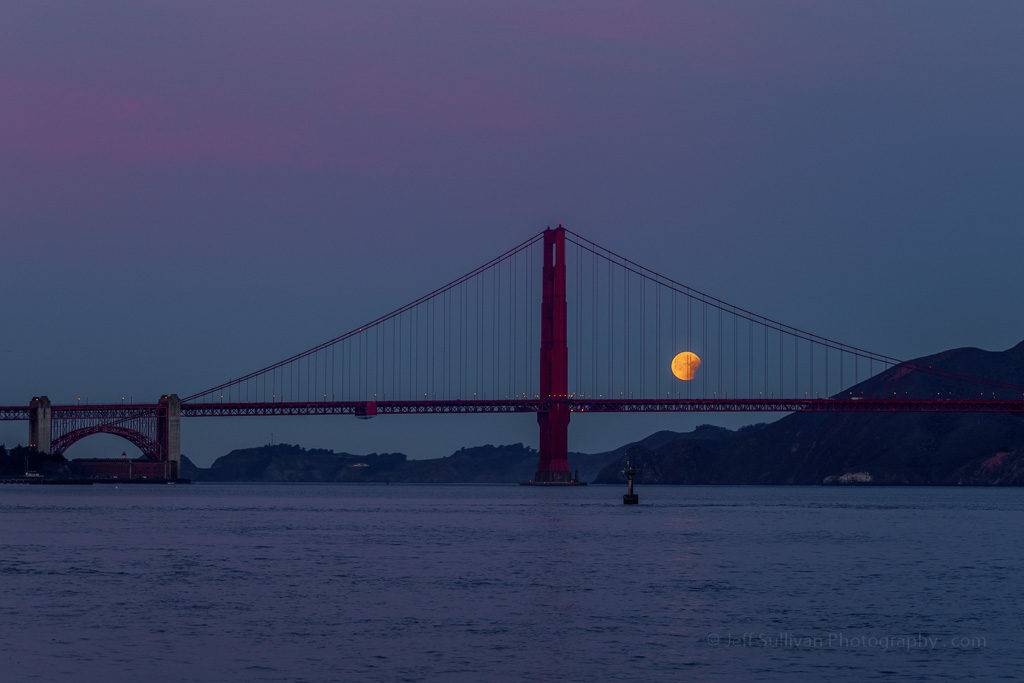
California astrophotography

Sunrise approaches as the partially-eclipsed moon sets behind the Golden Gate Bridge.[/caption] As it descends further, while shooting the lunar eclipse through San Francisco's Golden Gate Bridge, for a matter of seconds I decided to try to silhouette a vehicle against the setting, partially-eclipsed moon. A large delivery truck fit the bill nicely. I was shooting at 400mm, so I had to anticipate the movement of the vehicle enough ahead of time to leave mirror lock-up on!
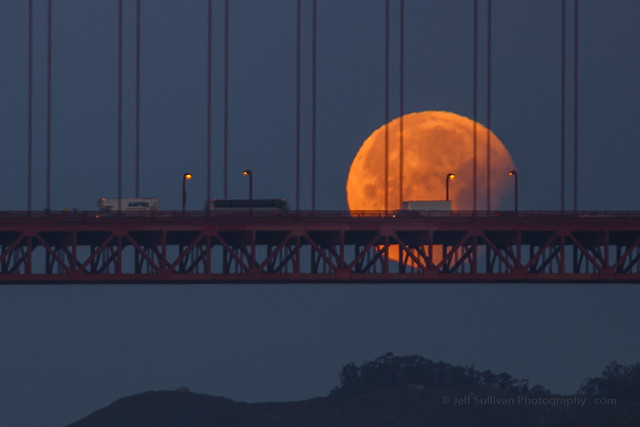
Early Morning Delivery 
Note the rough edge to the moon. At this high degree of telephoto, on the moon in the lower couple of degrees of elevation when our view of it is through a lot of turbulent air, the view of the moon is visibly distorted. No doubt there will be many faked shots from this eclipse as usual, and a recent article on FStoppers discusses some of the ways you can spot them. So to summarize, anticipating an interesting place to capture the mono alongside earth-bound features using apps like PhotoPills and The Photographer's Ephemeris (TPE) enables the capture of many compositions beyond "Just another lunar eclipse shot"... not that there's anything wrong with that! So once the eclipse is "in the can" (like a reel of exposed movie film), what next? Think of something to shoot while you're in the are, or on your way home! A quick detour to the California Coast, the Mendocino area in this case, fit the bill nicely. After the Eclipse Astronomical events aren't just opportunities for astrophotography, they are a great excuse to get out. travel, and shoot!  The weather can be surprisingly warm along the California Coast in the winter given the heat sink effect of the water and the lower winds compared to summer.  Temperatures in the high 50s by noon and walking down Main Street Mendocino, I had to take off and carry my jacket as I became too hot to wear it. Post-Eclipse Sunset

Tuesday, December 26, 2017

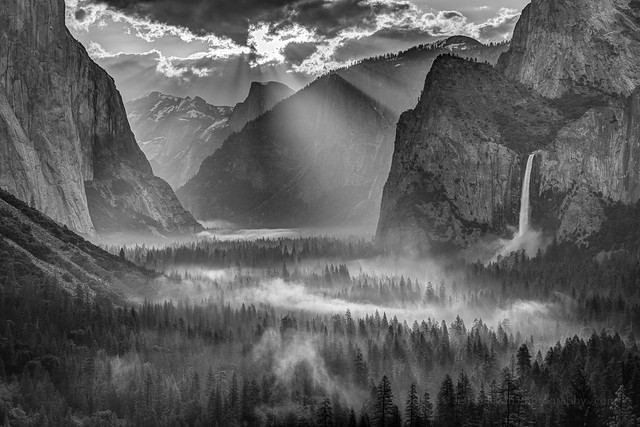
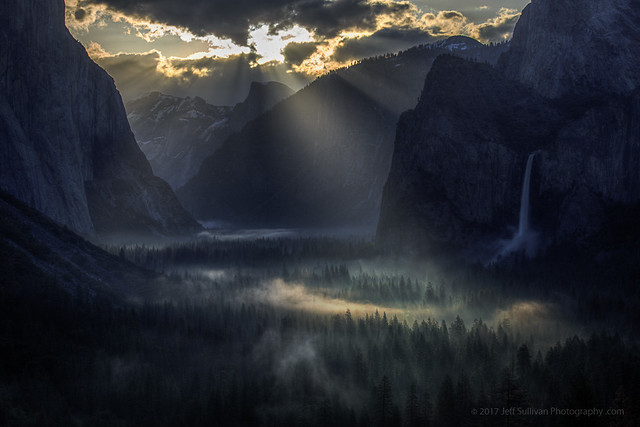
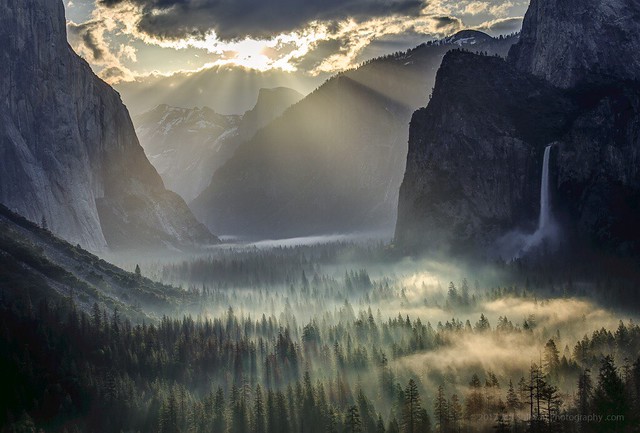
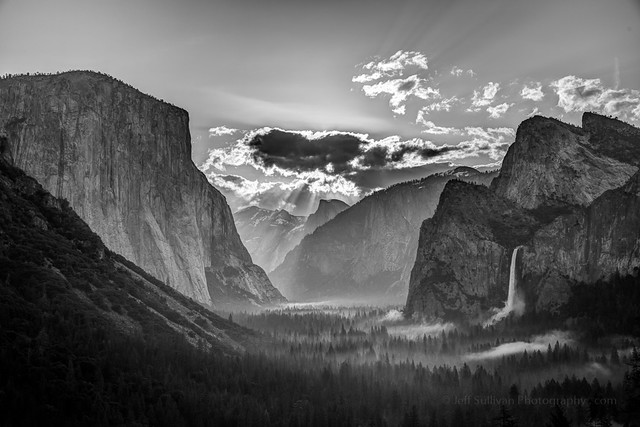
Outdoor Photographer Magazine Iconic Locations Winner

Yosemite Morning Sun Rays

Thank you Outdoor Photographer Magazine for selecting my photo as the winning image for your Iconic Locations challenge!  See the write-up on their site for more information on how the image was created:
https://www.outdoorphotographer.com/iconic-locations-assignment-winner-jeff-sullivan/

OP was kind enough to share the image on their Facebook page and Twitter timeline as well.
Here are some more images from that amazing sunrise during my photography workshop in early May:

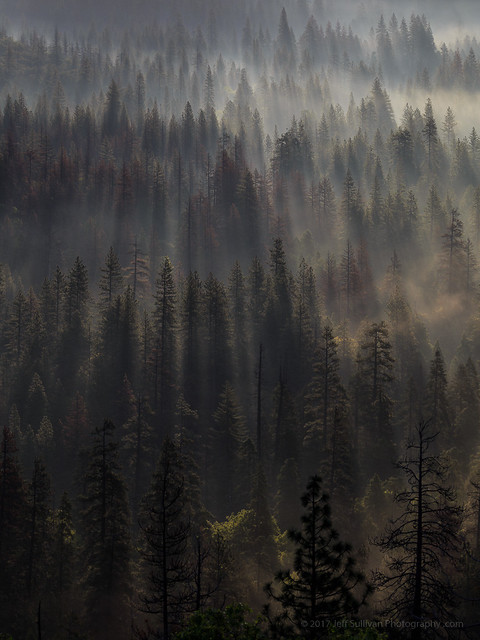
Yosemite Light Rays on Valley Fog

Light Rays On Morning Fog

Yosemite Valley Morning Light

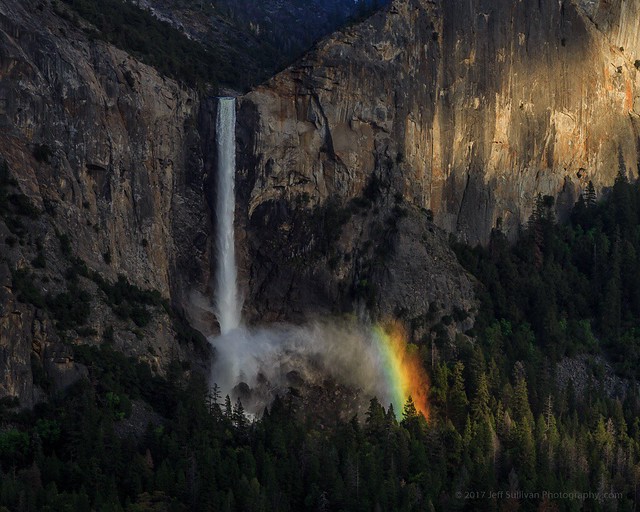
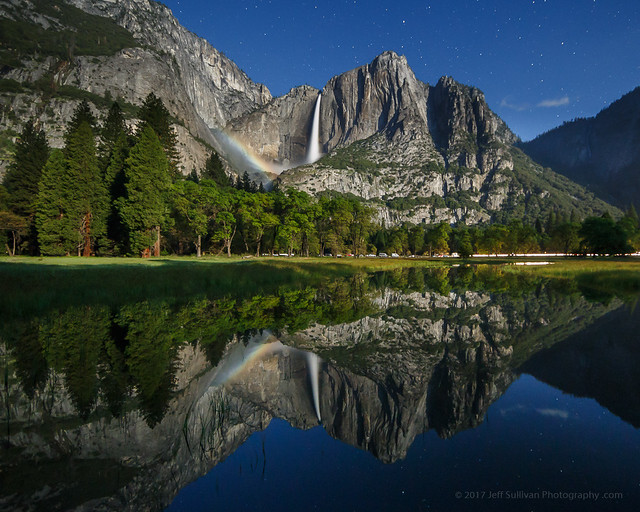
Rainbow in the Mist Moonbow Reflections 2017
Climber Lights on El Capitan

Morning Fog in Yosemite Valley

See my Web site for many more images from my 2017 photography workshops: www.JeffSullivanPhotography.com

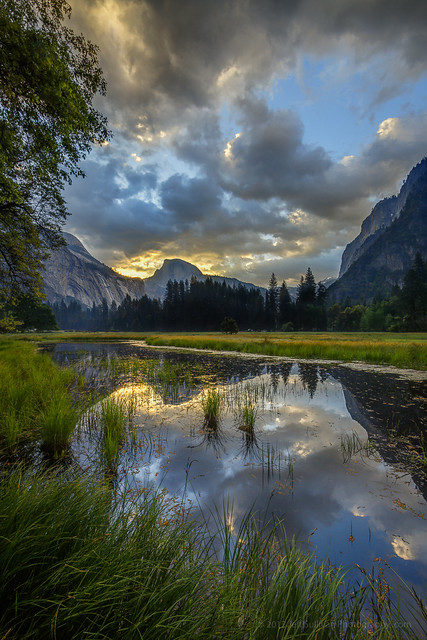
Half Dome Morning Reflection

Wednesday, October 04, 2017

Watch the Moon Rise at Sunset Tonight, October 4, 2017

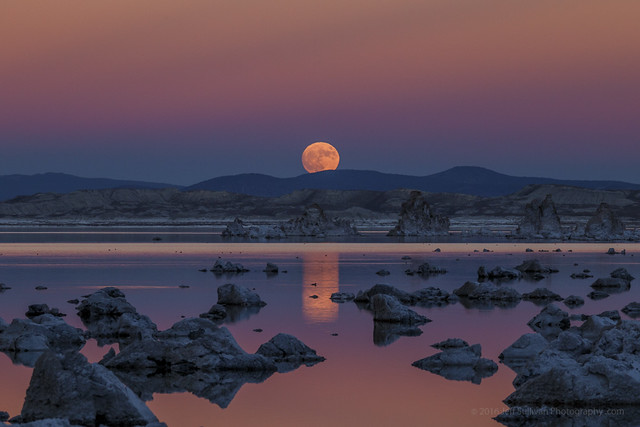
Mono Lake Tufa State Natural Reserve: Super Moon Rise

The moon will rise shortly before sunset tonight, providing a perfect opportunity to photograph the moon near the horizon at sunset.  Here are 38 degrees north it'll rise about 15 minutes before sunset, and be about 1.6 degrees high, or three moon widths, above a zero-degree horizon at sunset.
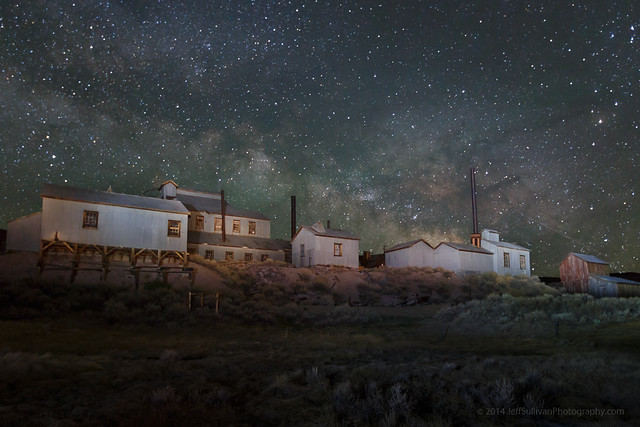
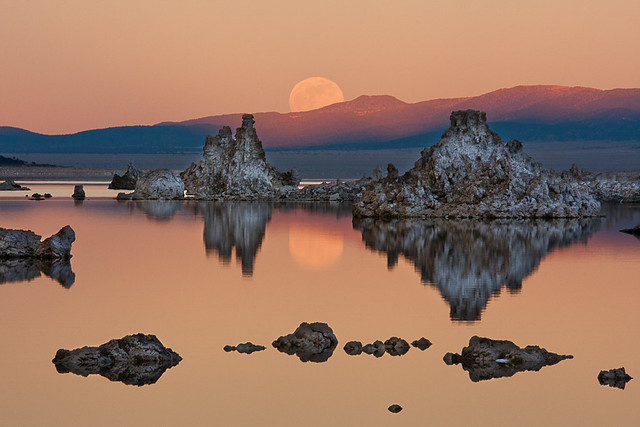
Mono Lake Moonrise (Re-edit) 

About ten minutes later as you may start to see the earth's shadow rise above the horizon, its blue color contrasting against the adjacent pink-orange last light of the sun in the "belt of Venus" effect, the moon will be about 3.5 degrees high, seven moon widths.

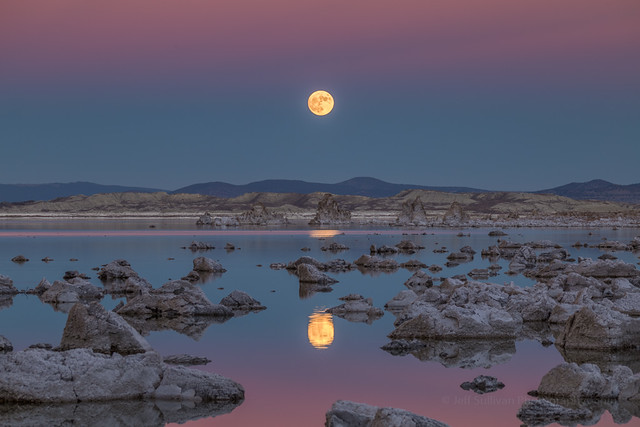
Super Moon Reflection

In apps such as The Photographer's Ephemeris and PhotoPills you can fine tune the times and moon direction and elevation for any shooting spot you might want to plan for.  Plan well enough, and you can anticipate compositions that place the moon reflecting in lakes, or beside or just over natural or man-made landmarks.

Moon Rise Behind Half Dome

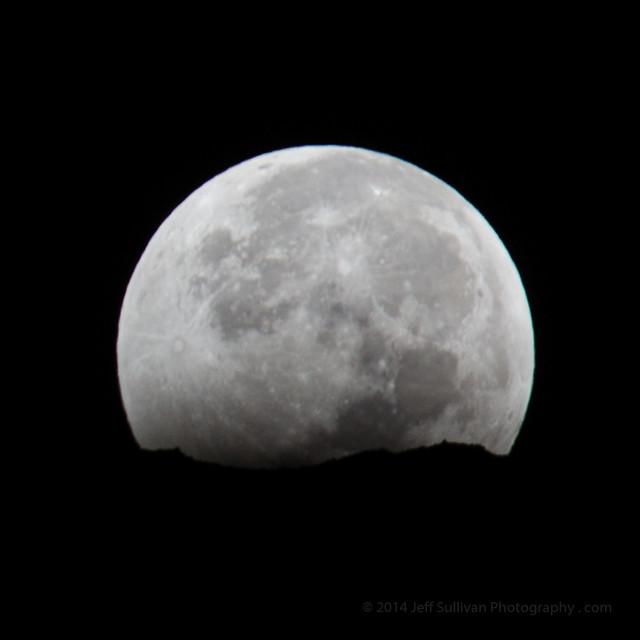
Similar opportunities present themselves on the opposite horizon with the moon set at sunrise, so look at your favorite astrophotography app and start planning! You can combine opportunities, such as catching a moon coming out of eclipse, as it sets behind a nearby ridge.

Partially Eclipsed Moon Setting, October 8, 2014

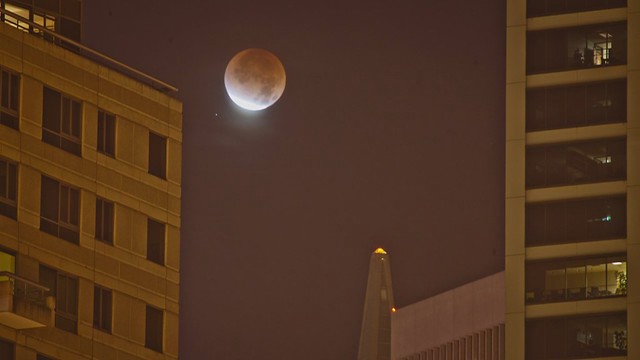
Or place the moon on a man-made structure like the tip of the Transamerica building in San Francisco.  I started shooting this sequence of images about 15 minutes ahead of time to show how the placement of the moon can be accurately planned in advance, and rendering the images as a time-lapse video lets you see the entire sequence:

Plan to Shoot the April 14/15 2014 Lunar Eclipse: Example Landing on the Transamerica Pyramid
As calculated, the moon ends up centered on the tip of the pyramid!
For a discussion of advanced considerations, read the article, "I've planned my supermoon eclipse shot: what could possibly go wrong?"

For a bonus on the tomorrow morning, I see in my SkyWeek+ app that the planets Venus and Mars will be within 1/4 degree of each other before dawn on October 5.  The StarWalk+ app shows me that they will be rising by about 5:10 am roughly due east.  Photograph them on and close to the horizon, then conditions should continue to improve improve by around 6 am as they're rising out of the thicker air and haze close to the horizon.  At that point they are still low enough to be captured in landscape shots as the oncoming twilight increasingly illuminates the landscape.  The sun rises close to 7 am, so they may fade as the sky brightens, and Mars in particular may be long gone by 6:30 am.

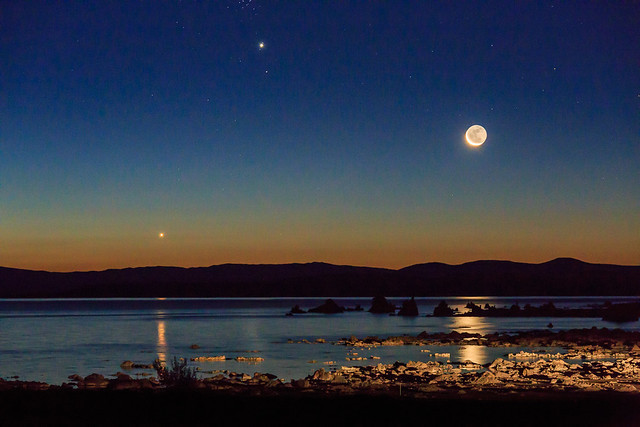
Venus Jupiter Moon Conjunction

You never know what you might come up with.  A while back I shot the moon with Jupiter and Venus rising nearby, and my photo was used in an article by astronomer Don Olson of the University of Texas, in an article in the August issue of Sky & Telescope Magazine!

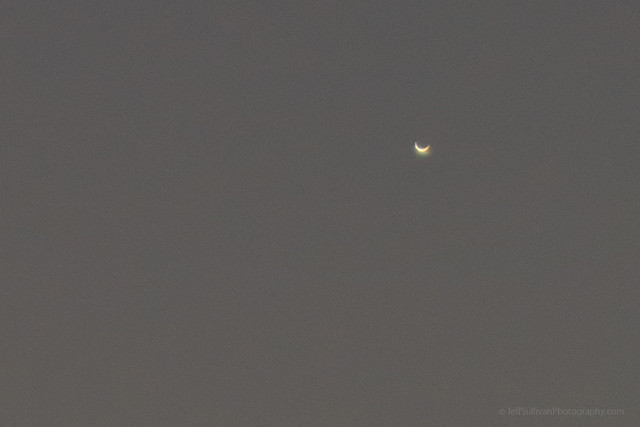
I haven't looked up the phase that Venus is in, but if you have a strong enough lens, youc an see that it's illuminated in a crescent phase.

Multi-Colored UFO?

The first step is to anticipate and plan for some great opportunities with the moon and/or planets. Then get out there and shoot! Tonight at sunset and tomorrow before dawn offer you a couple of good ones to start with. You never know what you might discover!

Friday, May 13, 2016

Eastern Sierra Photography Workshop in June: What's in Store?


“The Traveler sees what he sees. The Tourist sees what he has come to see.” G.K. Chesterton

Eastern Sierra Mules EarsI can only be in one place at a time, so I have to be efficient and pack as much opportunity as I can into my time in the field. Every day has the sun rising and setting. Some weeks have wildflowers. Fall colors may be peaking in a given location for only a few days to a week. The Milky Way is available during a few weeks of the year, a moon rise at sunset or moon set at sunrise about a dozen times each. So I pick a prime season, the most likely peak days and times.

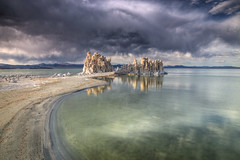
Storm Over Mono LakeWorkshops take me out of the field as I work on permits, itineraries, write descriptions, set up payment / registration buttons, and I perform a some kind of marketing to get them seen, if only a mention or two on social media. I'm not going for volume, and I personally lead all of my workshops, so they are designed to place you in a stunning place, in a peak season, as the exact best time.

The first week of June is amazing for the Eastern Sierra for so many reasons. Some snow remains on the Sierra Nevada (and possibly the White Mountains) to catch alpenglow, and there can be a fresh snowfall around the end of May to refresh that surface. Several species of wildflowers are starting to bloom, profusely in some areas.

This year the new moon and Milky Way shooting timing coincides with this week, and we have the possibility of a late spring storm from the northwest for interesting sunrises and sunsets, or warmer monsoon moisture from the Baja coast that could bring dramatic afternoon clouds, showers and rainbows, or evening thunderstorms.

I used to be nervous about the thunderstorms interfering with night photography, but I've learned through experience in Bodie and the surrounding area that convection-driven storms tend to break up or blow east by the time the sky is fully dark around 10/10:20, so they're really just bonuses for sunset and twilight shooting, even when rain showers interfere locally for an hour or so (and even then they often give way to rainbows).

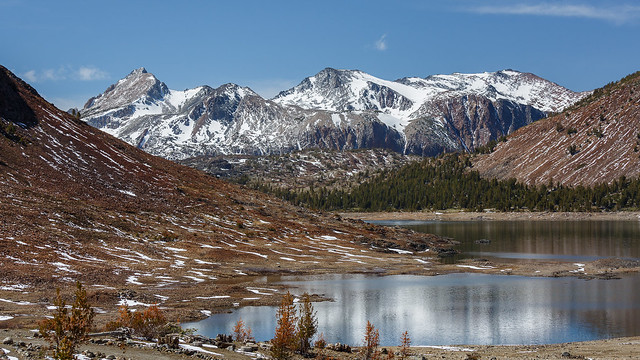
Fresh Snowfall at Ellery LakeTioga Pass may have just opened and we may have interesting iceout conditions on the lakes. More often than not the pass opens in May, so with 89% snowpack, the odds are good for a normal, mid to late May opening. It seems like they often try to wrap up whatever road maintenance is needed in time for an opening for Memorial Day weekend, so I'm going to guess Friday at noon as the official time, but cars line up early and they often let them in around 9 am.

We'll start with a sunrise on Thursday, pursue wildflowers and weather during the day, have an early dinner, and head back out for sunset at Mono Lake.

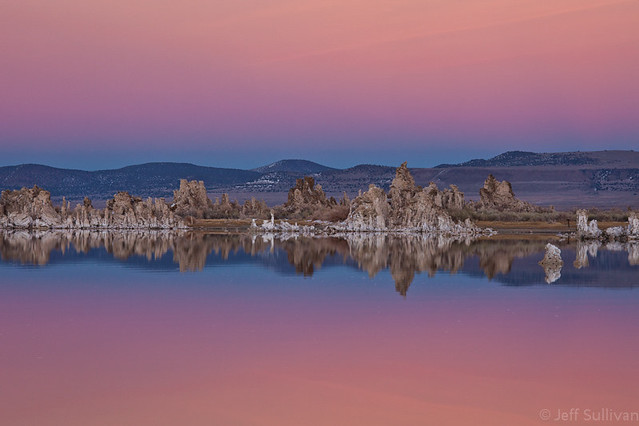
Entering the Earth's Shadow

We'll pick from a number of spots for Milky Way shooting, and arrive by the time it's fully dark at 10:07, when the galactic center of the Milky Way has already risen 6 degrees, perfect for placing it in our compositions.

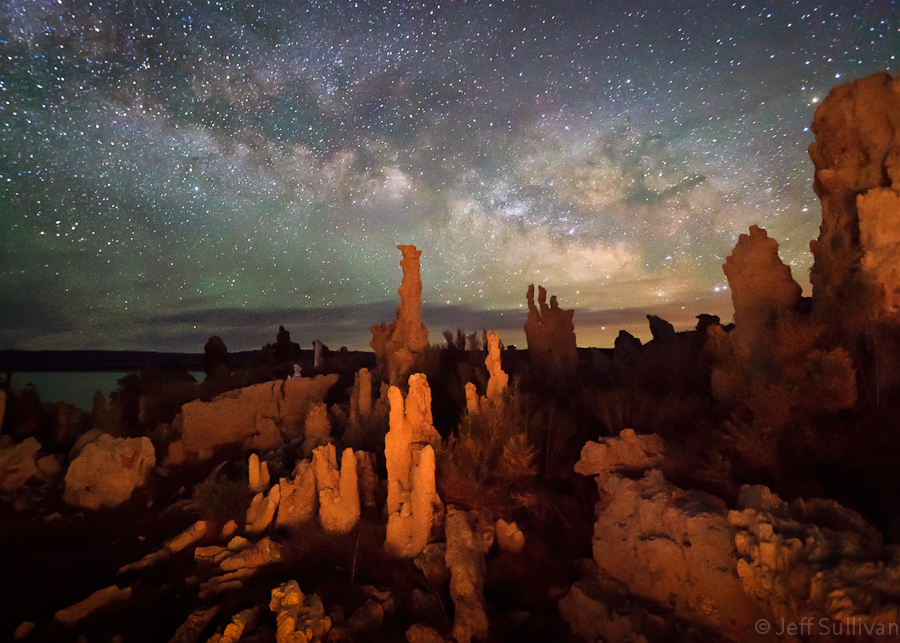
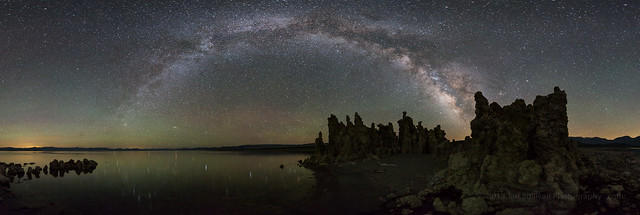
Mono Lake Milky Way Panorama

Friday we'll catch sunrise at Mono Lake before the weekend crowds arrive, shoot different wildflowers, maybe explore some interesting geology or head up to Tioga Pass if its open for snowier views. Another sunset spot, More night photography, and turn in not too late since most of us are continuing on to Bodie the following night, and Bodie interiors the following morning.

Eastern Sierra Wild Iris

Plans are all well and good; I frequently plan something as simple as a sunset moon rise composition weeks in advance.  But landscape photography is about light, so if you're on a workshop, you want a leader have enough depth in detailed regional knowledge to be ready to ditch all plans and react to the weather and light if there's more potential 20 or 30 miles from where you are.  So leave the tourists behind who are stuck to their fixed agenda, and rather than a traveler who reacts to the weather and looks for a place to shoot it, you can travel with a local who knows the opportunities in every direction, and anticipates the conditions before you pick the next destination and hop in the car to arrive there just in time.

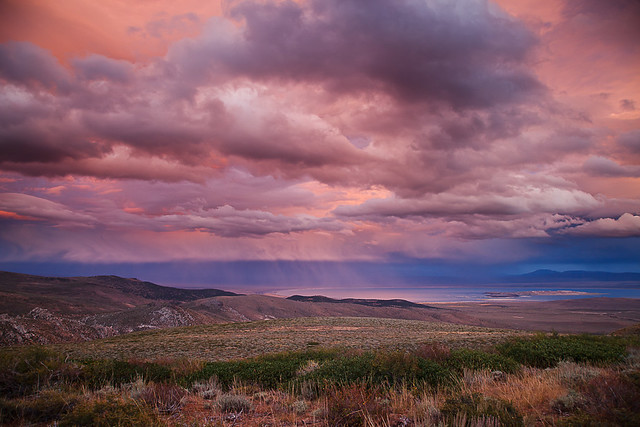
Sunset Rain Clouds Over Mono LakeEarly June in the Eastern Sierra offers an annual convergence of so many factors which could make photography conditions stunning.  Photography is more fun shared, so I can't wait, and all the better that I get to share all of this bounty with old and new friends!

Spring is Coming to the High Sierra!

Most of the participants are returning customers, but we have room for one or two more if anyone's interested!

Bodie's Standard Mill

Milky Way Arch Over Standard Mill

Connect with or contact me in all of the usual places for photographers: Flickr, Facebook, Instagram, Twitter, Google+YouTube, 500px, Tumblr, or my Web site.

Friday, April 01, 2016

California Wildflowers in April: Figueroa Mountain Road

Sunset from Figueroa Mountain Road
Are you looking for a place to find wildflowers along California's Central Coast? Figueroa Mountain can be a great place to see wildflowers when the timing is right. Helen Tarbet of the Los Padres National Forest sent out her first wildflower update of 2016 to email subscribers on March 18. She reports that "California poppies are blooming throughout the mountain" and "Other wildflowers to look for as you continue your uphill climb include, buttercups, goldfields, coreopsis, shooting stars, ceanothus, California poppies, Mexican elderberry, blue dicks, fillaree, royal lupine, lomatium, fiddlenecks, beautiful pink prickly phlox on the serpentine rock formation on the right and lovely orange wall flowers just beyond that. Also, you will see strikingly beautiful Catalina mariposa lilies in the open grassy fields and wild canyon peas in some shaded areas. At Vista Point (large gravel turnout about 11.4 miles from the bottom), exquisite chocolate lilies are in bloom..."

The variety along this road can be stunning. I hope to get back down there next week, but in the meantime, here's my description of Figueroa Mountain Road Recreation Area on page 218 of my Photographing California - South guidebook, illustrated with a few extra photos:
---

Figueroa Mountain Recreation Area, Los Padres National Forest 

Home to an annual wildflower bloom each spring, Figueroa Mountain provides a variety of species at various elevations, diversifying your opportunities and extending the wildflower season. The U.S. Forest Service often provides updates on the timing and progress of the wildflowers as they emerge in the February through April time frame, so if you have the opportunity, check their Web site for current conditions.

Photo advice: A selection of lenses will help you capture a variety of perspectives on the flowers. California poppies are one of the most common species of wildflower here, and they don’t open until they have warmed up in the sun, so it’s not necessary to rush up here for sunrise.

Getting there: From US-101 take CA-154 East, San Marcos Pass Road, 3.0 miles, turn left on Figueroa Mountain Road.

This is a narrow mountain road and your drive on it may take you 15 miles or more and increase in elevation 3000 feet. It is not recommended for large vehicles or trailers.

Time required: You’ll probably need 2 - 3 hours or more to navigate the road and have some time for photography.

Nearby location: Also in the spring, the oak-laden hills and pastures in the first mile or two of Figueroa Mountain Road may offer wildflowers such as wild mustard.
---
Lower Figueroa Mountain Road
After enjoying the wildflowers, consider exploring the town of Los Olivos and the wineries of the Santa Ynez Valley.