Showing posts with label nature. Show all posts

Thursday, January 09, 2020

My Top 10 Travel Photos 2019

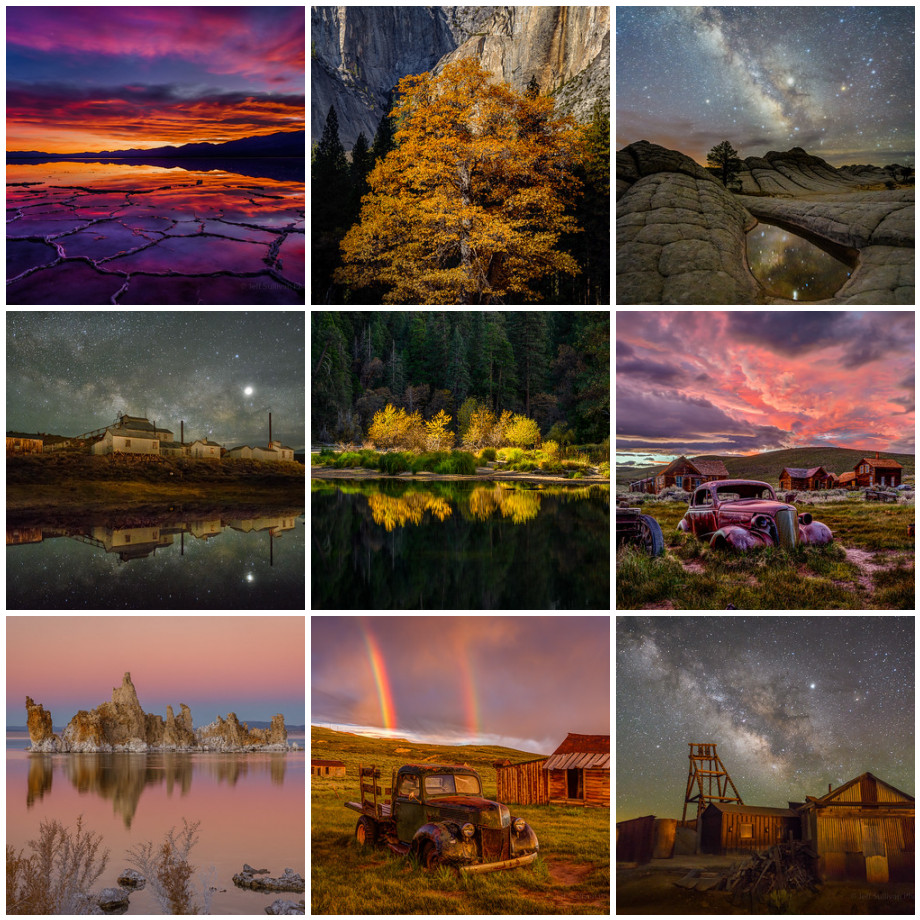
top nine 2019 images
Some of my favorites on Flickr in 2019: 1. The Sunset That Wouldn't End, 2. Oak and Granite, 3. Milky Way and Sunrise Light, 4. Bodie Milky Way and Mill Reflection, 5. Cottonwood Trees Against Shadowed Pines, 6. Intricate Bodie Sunset, 7. Tufa Island Reflection, 8. Return of the Rainbows, 9. Nevada Mines and Ghost Towns at Night 
It's that time of year again! Photographers are posting collages of their Top 9 most popular posts on Instagram. I only put 42 images on Instagram in 2019 so far, less than one per week. Due to variations in number of people on Instagram at various times of day and how the site's new post distribution algorithms affect my posts, I didn’t see many of my own favorite images among the most-liked posts on my Instagram account (shown below),so I tend to make my own selection.

I don't have the privilege or luxury of being able to travel the world to pursue great images, but I live within easy driving distance of spectacular mountains, coastlines and deserts. I anticipate unique sun, moon and star positions to enhance compositions, and in the course of exploring new locations for workshops and sharing them with photographers in workshops in the best seasons, I do capture a nice photo from time to time.

How to find and choose the best? On Flickr I find over 450 photos when I search for “2019”, and I saved over 100 new images into a 2019 Favorites album on Flickr:
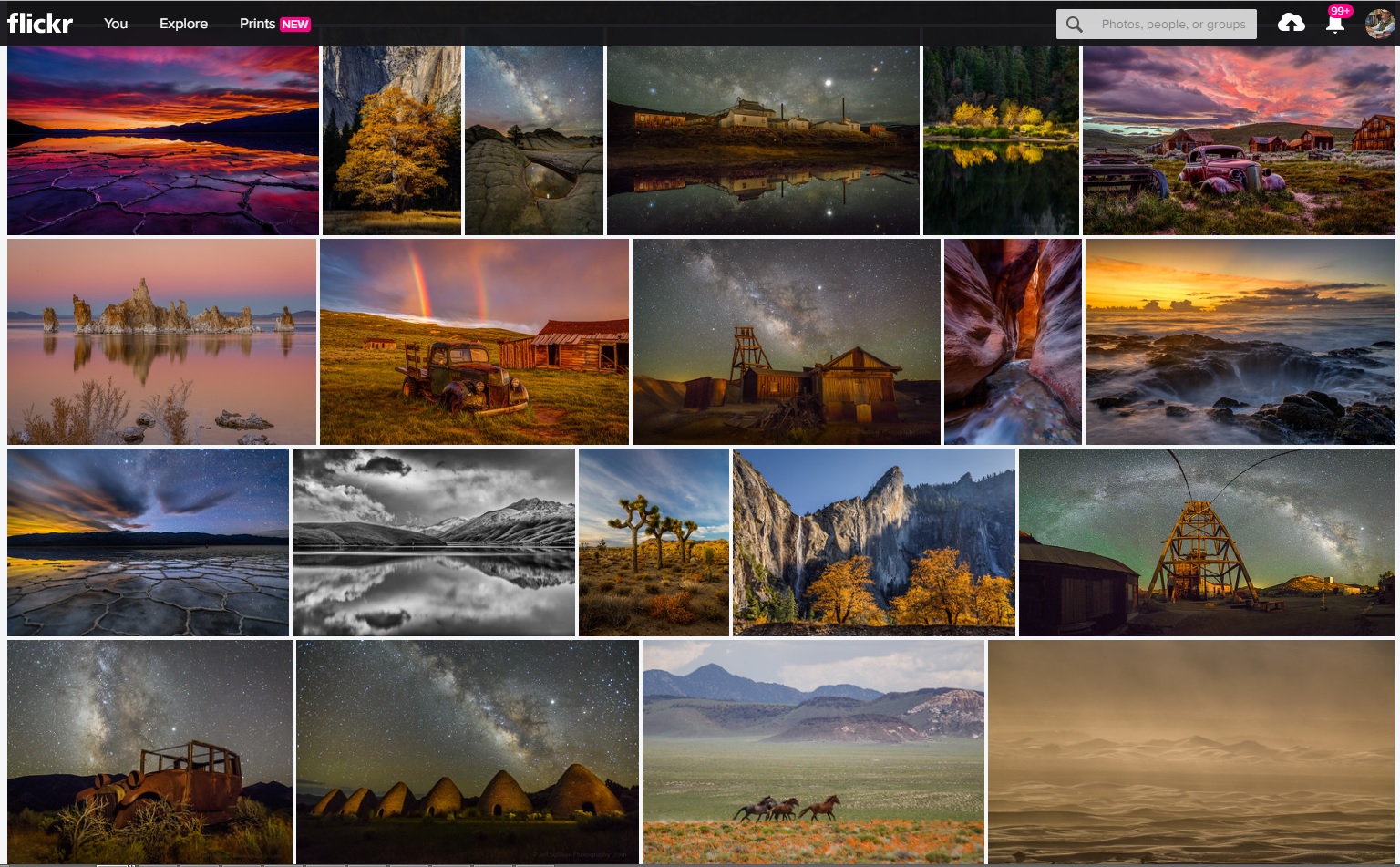
landscape abandoned and night photography
2019 Favorites album on Flickr 
As is often the case, some of my favorite images are newly-produced edits of past work, often discovered when revisiting old folders. As my tools, skills and objectives evolve, I see new opportunities for old images, often ones that I've never post-processed before. For the sake of my year-end roundup, I sort them to the end of my 2019 Favorites album and attribute them to their prior year. So for a top ten selection for 2019, let's go with the 10 images below. Top 10 Favorite 2019 Images I don't like selecting my year-end favorites too early since we often get great weather in early winter, as the following December 13 sunset on flooded salt flats in Death Valley demonstrates:

The Sunset That Wouldn't End
Badwater Basin, Death Valley National Park
#1    Rain is uncommon in the lower reaches of death Valley, where an average of only 1.9' falls, but sometimes runoff from rain in the mountains above helps temporarily restore prehistoric Lake Manly in Badwater Basin. A few weeks earlier, I came across great light on an oak in one of Yosemite's meadows:

#2:
Oak and Granite

This image quickly became my latest print, and it looks particularly good in a metallic print on paper, selected from my SmugMug site. New places were featuring prominently in my favorites, perhaps partly because they're new, but also I think that it's easier to take an entirely fresh look at a location when it's your first time there. Although I've visited White Pocket, Arizona before, this was my first clear night there:

#3:
Milky Way and Sunrise Light

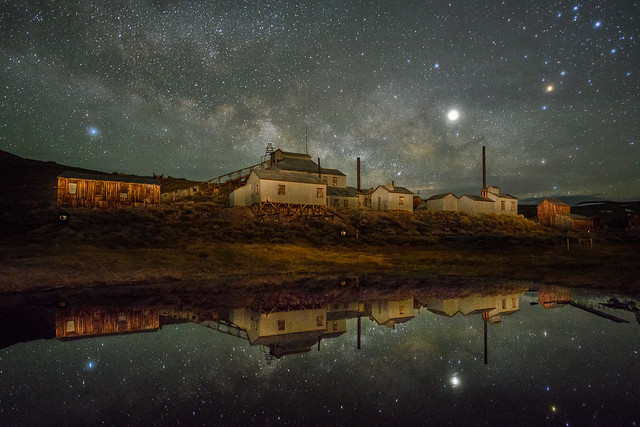
I had just picked up the Nikon D850 in December, and not only was this one of my first Milky Way images captured on it, I was interested in testing its dynamic range on the Milky Way reflection.

#4:
I like a good challenge, so Milky Way reflection was on the menu again in June in Bodie State Historic Park: Bodie Milky Way and Mill Reflection
#5:
 Every year I run across new time-light dependencies in Yosemite National Park. Fall opportunities in particular can rely on a single set of vegetation getting spotlighted with light for a few minutes, like these young cottonwood trees by the Merced River:

Cottonwood Trees Against Shadowed Pines

While opportunities based on sun position are repeatable and predictable, other times an opportunity is more serendipitous, like sunset color on complex storm clouds in Bodie:

#6: Intricate Bodie Sunset

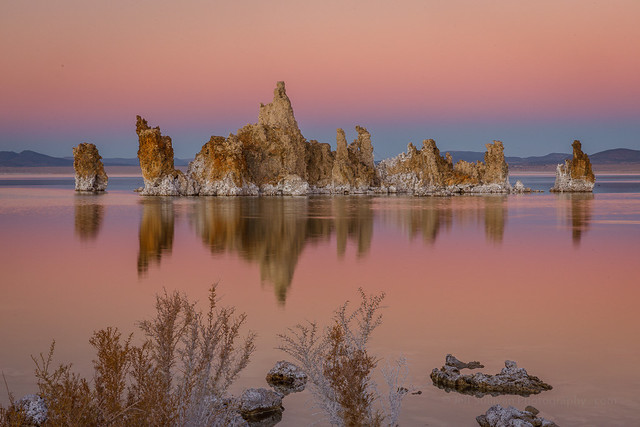
Sometimes we revisit a favorite spot, only to be treated with exactly the kind of lihgt we like to see from it, like this Belt of Venus effect captured at Mono Lake:

#7: Tufa Island Reflection
Weather can enhance our compositions, like this third brief double rainbow that appeared one evening in Bodie:

#8: Return of the Rainbows

Other compositions can be anticipated months or even years in advance, you just have to allocate time in your schedule to go get them, like the Milky Way rising over this mine in Nevada:

#9: Nevada Mines and Ghost Towns at Night

Even locations with iconic compositions can offer great results if you look a little harder at what else is there, like this downstream composition at Kanarra Creek in Utah, which works well without Upper or Lower Kanarra Falls:

#10:
If Antelope Canyon Had Water...

I still have dozens of places on my "to do" list, come experience the thrill of discovery! So that last image was a bonus, and the one prior isn't really one of my "best" photographically speaking, but you can find dozens of contenders in my 2018 Favorites album.

2019 Runners-Up

Other 2019 images I liked but didn't quite include:
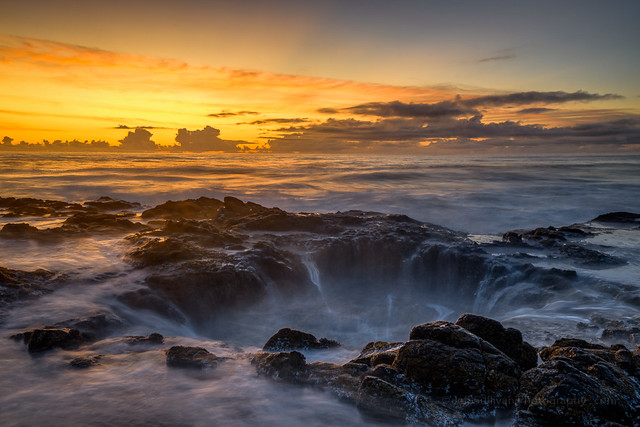
Thor's Well

For some reason Thor's Well seems frequently enough captured that it needs particularly good atmospheric conditions to make it stand out. No doubt I'll revisit the place more to see what else the site delivers in light and conditions. Sometimes there's no place like home, like this winter storm reflected on Topaz Lake:

Topaz Lake Winter Reflection (Black and White)

Prior Years' Images Discovered or Reworked

 Sometimes I can't get to a particular image in the year I captured it, either because I lack a sufficient tool to do it justice, or I simply don't have the time required to work on it. My "new or improved" images from past years included some real stunners, particularly ones re-imagined in black and white:

Geyser Basin and Trees in Morning Sun RaysCalm Before the Storm
Breaking Storm Over The Palisades Galactic Center & Standard Mill

Honors & Recognition


View this post on Instagram
 
Congratulations to @jeffsullivanphotography for winning the recent Your Best Photo of 2018 Assignment with the image, Golden Hour on the Oregon Coast. “Sometimes, the most interesting photos we take are from a new location or from a fresh look at a place that we haven't visited in a long time,” says Sullivan. “In 2018, I took a 2,000-mile road trip to revisit some of my favorite places in Oregon. Although I lived in Oregon for years in the 1980s and revisited a lot in the mid to late 2000s, I hadn’t been to some of these places in years. I had a great time on this latest lap, but even with 2-plus weeks it wasn’t enough time, so I’ll just have to go back soon! “My main exposure here was 1/8th of a second at f/16, ISO 200, and that produced a useful result, but HDR processing in Photomatix provided more shadow detail and highlight color, for a better overall result. The images were adjusted in Adobe Lightroom prior to HDR processing, then additional adjustment was conducted afterward as well.” * * * #OPAssignments #Oregon #landscape_lovers #sky_captures #landscapephotography #fantastic_earth #landscape_captures #ic_landscapes #ig_exquisite #ourplanetdaily #landscape #landscapelovers #instanaturelover #welivetoexplore #allnatureshots #specialshots #landscapestyles #nature_perfection
A post shared by Outdoor Photographer Magazine (@outdoorphotomag) on

Now it’s time to go out and capture another 100+ from 2020! To join me in the pursuit of images like these, check out my workshops listed at the top of the blog on my Web site.

My Favorite Landscape / Travel Photos from Each Year, 2006 – 2018

Here are some of my collections from prior years.  It has been a great 14 years of adventure, I can’t wait to see what I can find to show you in the years to come!

2018 Favorites photo album on Flickr 
2018 Top 10 Landscape/Travel Blog Post

2017 Favorites photo album on Flickr 
2017 Top 10 Landscape/Travel Blog Post

2016 Favorites photo album on Flickr 
2016 Top 10 Landscape/Travel Blog Post

2015 Favorites photo album on Flickr 
2015 Top 10 Landscape / Travel Photos Blog Post

2014 Favorites photo album on Flickr 
2014 Top 10 Landscape / Travel Photos blog post

2013 Favorites photo album on Flickr 
2013 Top 10 Landscape / Travel Photos blog post

2012 Favorites photo album on Flickr 
2012 Top 10 Landscape / Travel Photos blog post

2011 Favorites album on Flickr 
2011 Top 10 Landscape / Travel Photos blog post

2010 Favorites album on Flickr 
2010 Top 10 Landscape / Travel Photos blog post

2009 Favorites photo album on Flickr
2009 Top 10 Landscape / Travel Photos blog post

2008 Favorites photo album on Flickr
2008 Top 10 Landscape / Travel Photos blog post

2007 Favorites photo album on Flickr 
2007 Top 10 Landscape / Travel Photos blog post

2006 Favorites photo album on Flickr
2006 Top 10 Landscape / Travel Photos blog post
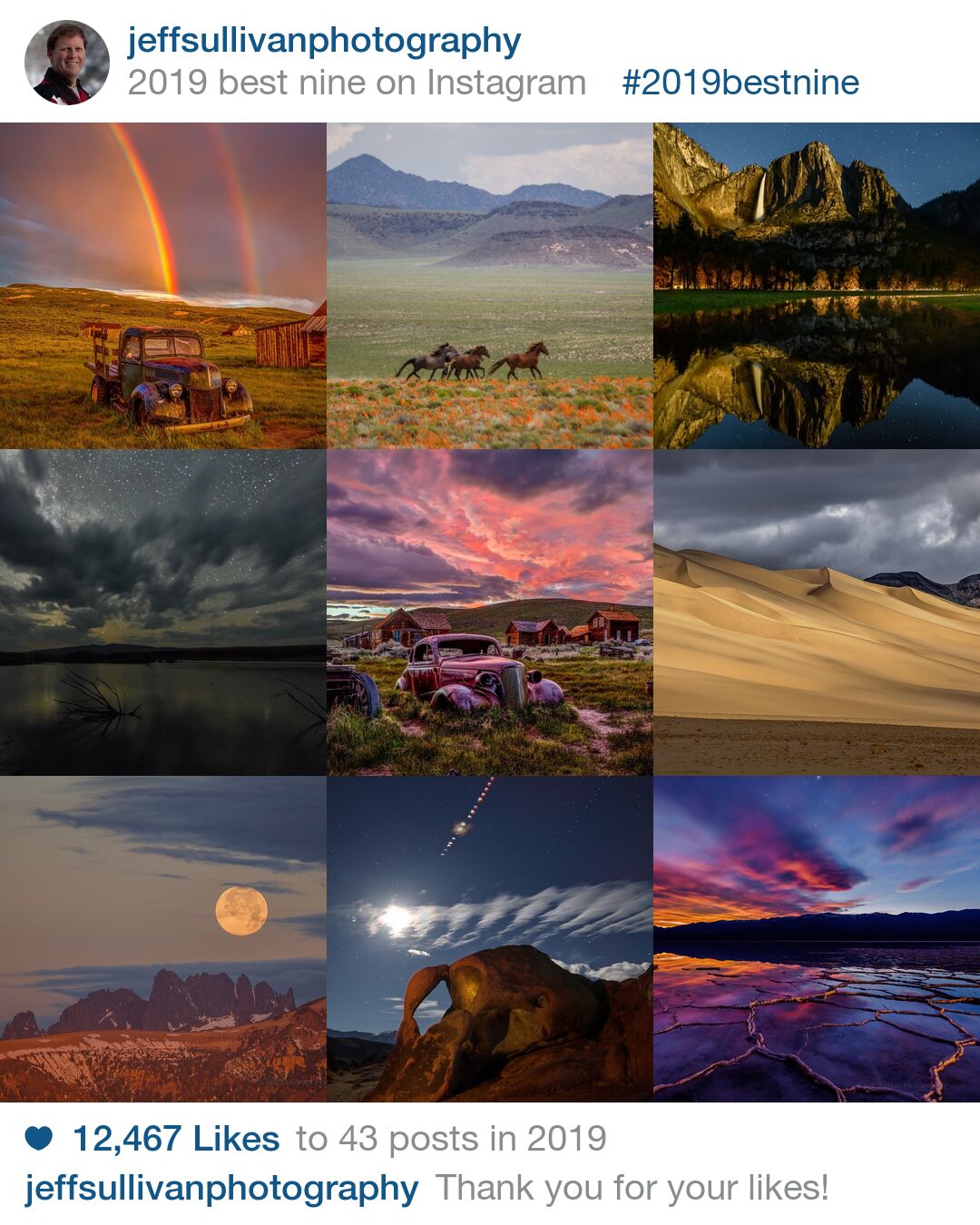
My most popular photos on Instagram in 2019. #bestnine2019[/caption]

Monday, November 17, 2014

Catch the Leonid Meteor Shower Nov 17/18!


The Leonid Meteor Shower, one of the best meteor showers of the year, is happening this week, peaking around November 17/18. The meteors appear to originate from the constellation Leo.  The radiant point that the meteors seem to originate from rises slightly north of due east shortly after after 11 pm.

Long, earth-grazing meteors could be visible coming out of the eastern horizon before the radiant point rises. You can download an app such as StarWalk to a smartphone or tablet to make identification of the constellation and radiant point easy. As night progresses the portion of the earth that you're standing on rotates around to the forward path of the planet hurtling through space, where it collides with more space debris.  The path of the earth is due east at midnight, so the sky and atmosphere above you acts like a big scoop collecting meteors and creating long fireball trails.  The eastern half of your sky can collide with slightly more debris at that point, and more and more of the sky above you is directly facing the direction the earth is travelling as dawn approaches.  That's why early morning hours are often advised for meteor shower watching.

For 2014 however the moon will rise around 3 am at mid northern latitudes, so the best viewing will be roughly midnight to 2:30 am. Adjust your shooting direction to accommodate the east to west movement of Leo as it seems to circle the North Star and rises towards nearly overhead and slightly northeast as dawn approaches.

Check the weather forecast and moon rise times in your area to fine tune your viewing experience. To find a prime viewing spot, travel east away from cities to put the light pollution at your back. Good luck!

Tuesday, February 11, 2014

Seasons of Topaz


Seasons of Topaz, my latest time-lapse video,with "Sierra Wave" lenticular clouds, pogonip ice fog, rain, snow, sunrises, sunsets... a year's worth of weather in 3 minutes: http://youtu.be/W07_Yol2Ad4


The music, used with permission, is "Odyssey" (instrumental version) by The Wyld, as heard in the McDonald's commercials during the Sochi Winter Olympics.  Drop by their Web site for links to their social media pages where you can say "Hi": 
http://thewyldmusic.com/ 


Friday, February 03, 2012

Shoot Wildflowers in the California Desert?

Anza Borrego State Park, California
How would you like to join me for a photowalk in March... capturing images of wildflowers, narrow, winding slot canyons, eroded badlands, cracked earth on a dry lakebed, a palm oasis or two, and more? We'll practice landscape photography, macro photography, and night photography including star trails and light painting.

No commitment necessary yet, I'm just checking for interest so I can get a sense of group size to finalize logistics. I'd propose starting in Anza Borrego for a weekend, and you can see 64 sample photos in the album above. The trip can also be easily extended to the Salton Sea area if some participants want a more comprehensive expedition. If there's sufficient interest, I'll announce more details in the next few working days.

Wednesday, June 08, 2011

In Search of a Magazine Cover Photo


Other Worldly, originally uploaded by Jeffrey Sullivan.

A couple of weeks ago Outdoor Photographer Magazine issued a call for potential cover photos. Always up for a challenge, I first created a quick set on Flickr of vertical landscape shots to sort through. There were some good candidates, but I really wanted this, so I decided to keep the cover in mind as I pursued night shots in the Eastern Sierra this week.

My first stop was Mono Lake. I arrived at 9pm, just as the stars were coming out and the Milky Way was starting to peek over the southern horizon. It was the night of the new moon, so with little ambient light to illuminate the foreground, I brought a selection of flashlights to provide light on the tufa rock formations. I used my typical 30 seconds at f/2.8, ISO 6400 dark night exposure, but I added a small amount of fill light. My LEDs were too blue on the light-colored tufa towers, and direct incandescent flashlight beams were too bright and created too much contrast. I was able to resolve this by moving around during each exposure and reflecting light off of nearby tufa towers, and if none were available, even using my face and hands as portable, positionable reflectors. Cup your hand, and the light is even controllable in general directions! I shot a variety of stills and star trail sequences, finishing with the shot above which allows enough room for a magazine title, articles and so on.

So one decent shot down, I moved to the Buttermilks, where I had a North Star star trails shot in mind. I arrived at 2am, but someone was parked there, camping where I was going to shoot! By the time I moved to another campsite, there was no way I was going to get up in 2 hours for sunrise... I slept in!

I was generally headed toward Kings Canyon and Sequoia National Parks, so in the morning I explored 4WD roads and checked current conditions in the Bishop Creek drainage, then moved on. I arrived at the Alabama Hills, again just in time for night shots.

I scouted out some locations and angles for night workshops, but the clouds were just thick enough to interfere with the production of great Milky Way or star trail shots. By midnight I moved to a decent sunrise location and called it a night.

The next morning I woke at my usual 45 minutes before sunrise (4:45am this week), and the clouds were broken but still blocking the sunrise color. Lacking any particular reason to get up, I stayed in my PJs and waited to see how things developed.


A while later shafts of light started illuminating Mt. Whitney. Game on! With no time to change, I just ran around in my PJs, switching lenses to catch a variety of compositions as the light evolved. I caught at least one dramatic but relatively simple composition of Mt. Whitney that should work well for a cover.
Mt. Whitney from the Alabama Hills
Even with the bust the night before, I felt that I had two solid contenders in two days... a decent start.

I continued south towards a southern hook around the Sierra Nevada and turned toward Kennedy Meadows and a scenic shortcut. The road was closed, and the forecast said it would be raining and snowing over in Kings Canyon for the next few days. Rain and wind was forecast locally as well, but I wasn't going to ditch the trip after two days, so I headed out into the Mojave Desert.

The next morning delivered nice sunrise color, and as I moved around a dry lakebed catching various compositions, there was also a short section of rainbow! The sunlight was really nice as it arrived as well. Third contender, maybe even a fourth.


That night the wind was howling. I literally turned on my lights at one point to see whether someone was rocking the vehicle back and forth as some sort of joke. My SUV was getting sandblasted, and my lenses would too... no shooting tonight.

The next day I took shelter in a coffee shop and went back out in time for another nocturnal adventure. Just as I was approaching a railroad crossing, a train stopped across the road! Google Earth confirmed no reasonable detours. I'd wait, maybe sleep, until the train moved.


Two hours later, it creaked and groaned out of the way, and I was back in business. I shot some moonset shots and started a star trails sequence.

I went to the other side of the car to set my alarm for sunrise, to avoid having light pollution in my shot. I heard something in the gravel on the side with my camera, so I walked around the back to see what was up. I nearly tripped over an animal, which startled and ran, which startled me nearly out of my shoes. I turned on a light, but never saw what it was... judging by the noise, probably a fox or small coyote.

As i started the timelapse I had seen the moon's light shining on some rocks witht he Milky Way overhead, so I headed over to see if they still had any remaining glow on them. They didn't have much if any, but it still made a nice concept, and I could simulate it with light painting. I tried it a few different ways and Bingo! Next candidate on the card.
Far Away (entry in OP's "Cover" assignment)

The Milky Way was really nice, so I decided to leave the camera running all night. It captured 400 frames in the 3+ hours before dawn light washed out the exposure. That yields a whopping 13 seconds of timelapse video: http://www.vimeo.com/24802819

Far Away from Jeff Sullivan on Vimeo.


Checking the weather forecast the next day I finally gave up on the idea of going to Kings Canyon. So I returned to the Alabama Hills, but although I arrived as the moon was tucking down behind the Sierra Nevada after midnight, I was too tired from the drive and the cumulative lack of sleep.

On the following nights the moon would be too bright and stay in the sky too late for Milky Way shots. Time to call the night photography quest a wrap! To round out 5 entries, I ended up choosing two from the trip, a recent Yosemite star trails shot, and added two seascapes from my portfolio for variety. Done. On to the next project!


Star Trails Over Yosemite Falls Weston Cove Sunset Cannon Beach Cloudy Sunset

Wednesday, April 06, 2011

Antelope Valley Wildflower Report 2011


Antelope Valley Poppy, originally uploaded by Jeffrey Sullivan.

Like many place in California the wildflowers aren't as prolific as last year, but it's far form a poor season. You'll have to hunt for the best patches, but here's a sampling of what I found in the Antelope Valley area over the past couple of days.


Carrizo Plain Wildflowers Spring 2011


Tidy Tips at Sunrise, originally uploaded by Jeffrey Sullivan.

Here's a quick photographic tour of conditions at Carrizo Plain a couple of days ago. Opinions on this year's bloom range from normal to "past peak" to "slow and coming," and all three may be true in places. Whatever the high level summary you want to assign, you'll work harder to find less compared to last year, but you can still find some great patches to work with if you put in the time and miles.


Note the new sharing options that will allow you to share this report with your friends on Facebook, etc!

Shell Creek Road Wildflowers


Shell Creek Road, originally uploaded by Jeffrey Sullivan.

Here's a quick update on wildflowers this year. The ample rains we've received can be critical for wildflower growth, but in too much quantity or at the wrong times, they also result in a bumper crop of grass, which seems to crowd out the wildflowers. Let's give it a couple more weeks before we declare this a normal to weak year in this area. For now the color tends to be sporadic and modest, favoring photography of a plant or bloom instead of landscape-scope carpets.