Showing posts with label night. Show all posts

Thursday, January 09, 2020

My Top 10 Travel Photos 2019

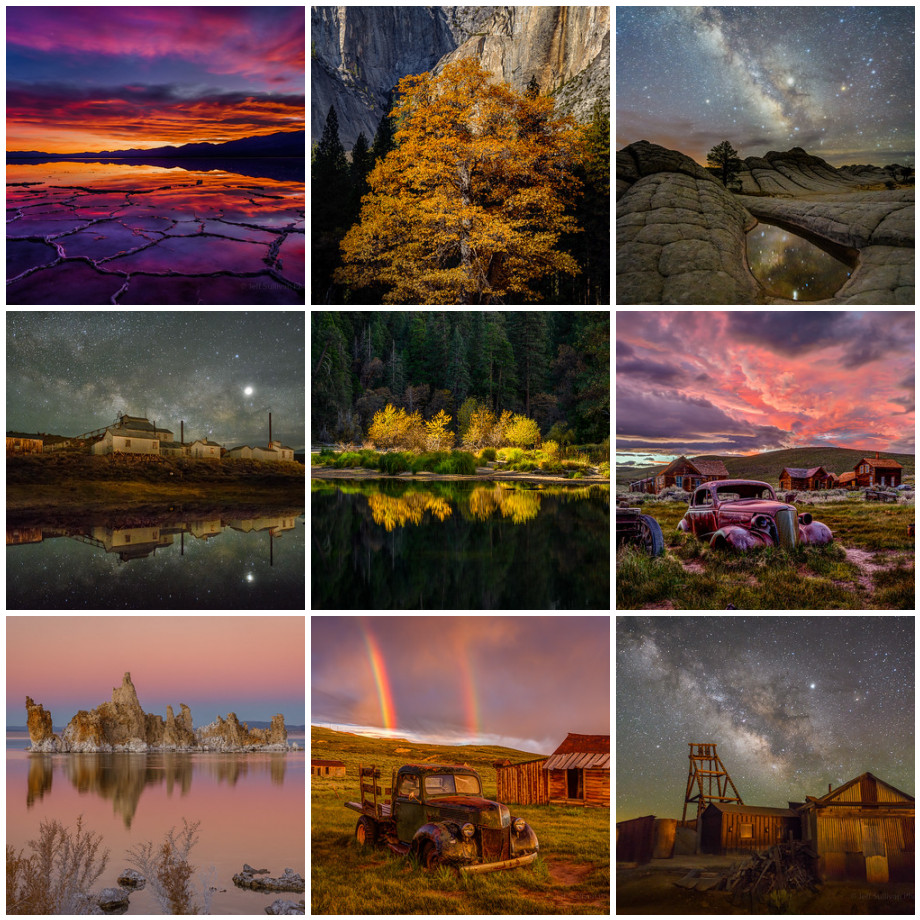
top nine 2019 images
Some of my favorites on Flickr in 2019: 1. The Sunset That Wouldn't End, 2. Oak and Granite, 3. Milky Way and Sunrise Light, 4. Bodie Milky Way and Mill Reflection, 5. Cottonwood Trees Against Shadowed Pines, 6. Intricate Bodie Sunset, 7. Tufa Island Reflection, 8. Return of the Rainbows, 9. Nevada Mines and Ghost Towns at Night 
It's that time of year again! Photographers are posting collages of their Top 9 most popular posts on Instagram. I only put 42 images on Instagram in 2019 so far, less than one per week. Due to variations in number of people on Instagram at various times of day and how the site's new post distribution algorithms affect my posts, I didn’t see many of my own favorite images among the most-liked posts on my Instagram account (shown below),so I tend to make my own selection.

I don't have the privilege or luxury of being able to travel the world to pursue great images, but I live within easy driving distance of spectacular mountains, coastlines and deserts. I anticipate unique sun, moon and star positions to enhance compositions, and in the course of exploring new locations for workshops and sharing them with photographers in workshops in the best seasons, I do capture a nice photo from time to time.

How to find and choose the best? On Flickr I find over 450 photos when I search for “2019”, and I saved over 100 new images into a 2019 Favorites album on Flickr:
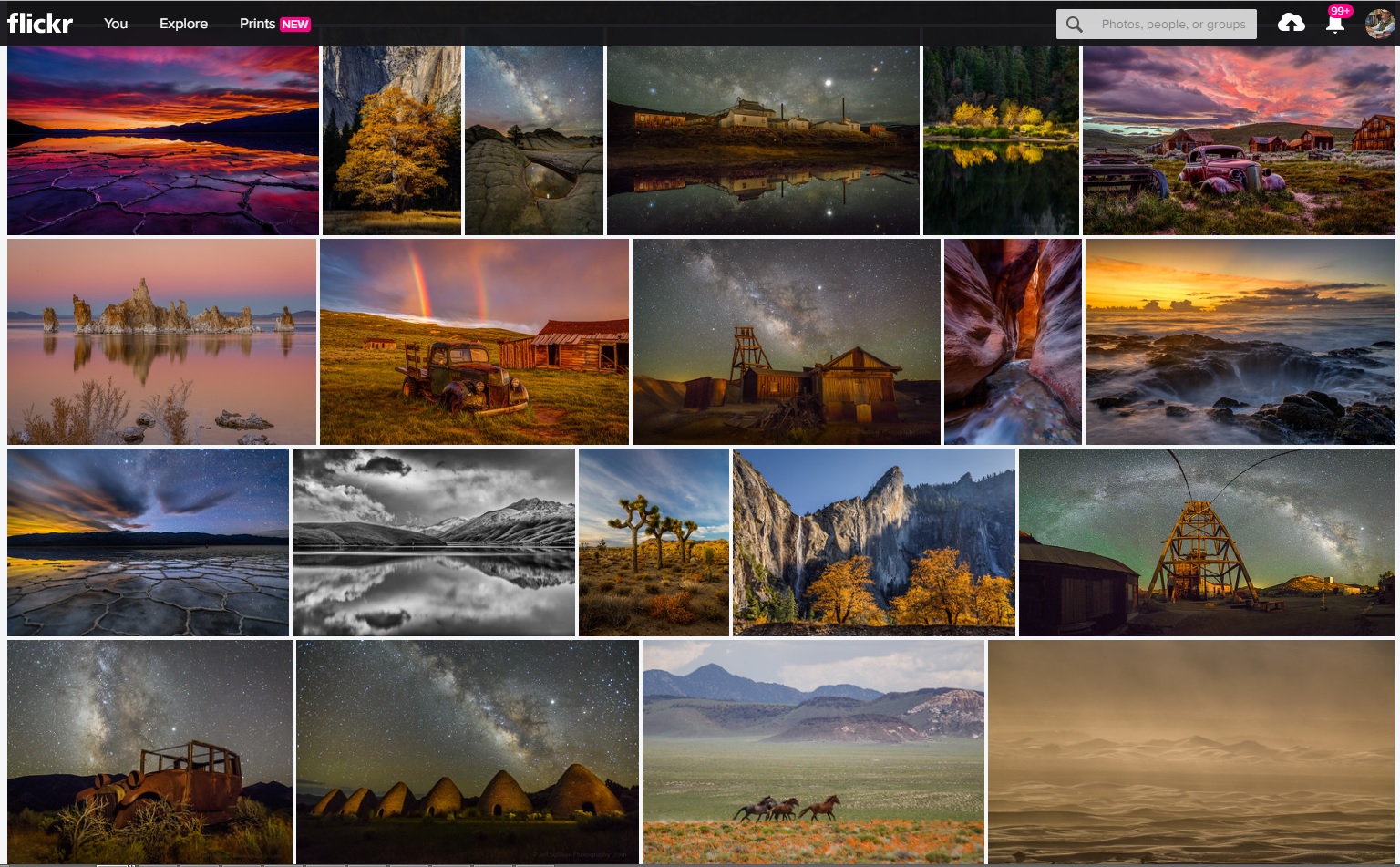
landscape abandoned and night photography
2019 Favorites album on Flickr 
As is often the case, some of my favorite images are newly-produced edits of past work, often discovered when revisiting old folders. As my tools, skills and objectives evolve, I see new opportunities for old images, often ones that I've never post-processed before. For the sake of my year-end roundup, I sort them to the end of my 2019 Favorites album and attribute them to their prior year. So for a top ten selection for 2019, let's go with the 10 images below. Top 10 Favorite 2019 Images I don't like selecting my year-end favorites too early since we often get great weather in early winter, as the following December 13 sunset on flooded salt flats in Death Valley demonstrates:

The Sunset That Wouldn't End
Badwater Basin, Death Valley National Park
#1    Rain is uncommon in the lower reaches of death Valley, where an average of only 1.9' falls, but sometimes runoff from rain in the mountains above helps temporarily restore prehistoric Lake Manly in Badwater Basin. A few weeks earlier, I came across great light on an oak in one of Yosemite's meadows:

#2:
Oak and Granite

This image quickly became my latest print, and it looks particularly good in a metallic print on paper, selected from my SmugMug site. New places were featuring prominently in my favorites, perhaps partly because they're new, but also I think that it's easier to take an entirely fresh look at a location when it's your first time there. Although I've visited White Pocket, Arizona before, this was my first clear night there:

#3:
Milky Way and Sunrise Light

I had just picked up the Nikon D850 in December, and not only was this one of my first Milky Way images captured on it, I was interested in testing its dynamic range on the Milky Way reflection.

#4:
I like a good challenge, so Milky Way reflection was on the menu again in June in Bodie State Historic Park: Bodie Milky Way and Mill Reflection
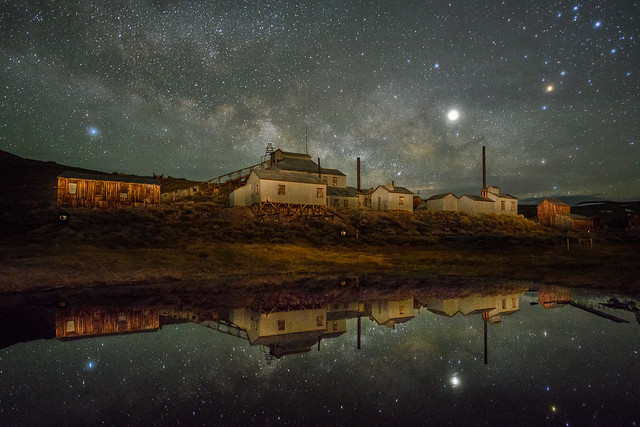
#5:
 Every year I run across new time-light dependencies in Yosemite National Park. Fall opportunities in particular can rely on a single set of vegetation getting spotlighted with light for a few minutes, like these young cottonwood trees by the Merced River:

Cottonwood Trees Against Shadowed Pines

While opportunities based on sun position are repeatable and predictable, other times an opportunity is more serendipitous, like sunset color on complex storm clouds in Bodie:

#6: Intricate Bodie Sunset

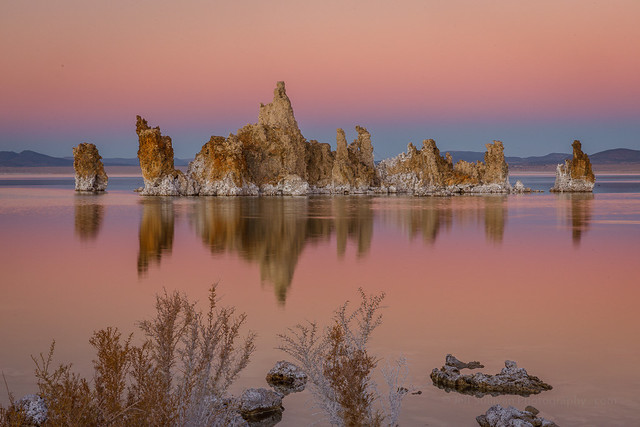
Sometimes we revisit a favorite spot, only to be treated with exactly the kind of lihgt we like to see from it, like this Belt of Venus effect captured at Mono Lake:

#7: Tufa Island Reflection
Weather can enhance our compositions, like this third brief double rainbow that appeared one evening in Bodie:

#8: Return of the Rainbows

Other compositions can be anticipated months or even years in advance, you just have to allocate time in your schedule to go get them, like the Milky Way rising over this mine in Nevada:

#9: Nevada Mines and Ghost Towns at Night

Even locations with iconic compositions can offer great results if you look a little harder at what else is there, like this downstream composition at Kanarra Creek in Utah, which works well without Upper or Lower Kanarra Falls:

#10:
If Antelope Canyon Had Water...

I still have dozens of places on my "to do" list, come experience the thrill of discovery! So that last image was a bonus, and the one prior isn't really one of my "best" photographically speaking, but you can find dozens of contenders in my 2018 Favorites album.

2019 Runners-Up

Other 2019 images I liked but didn't quite include:
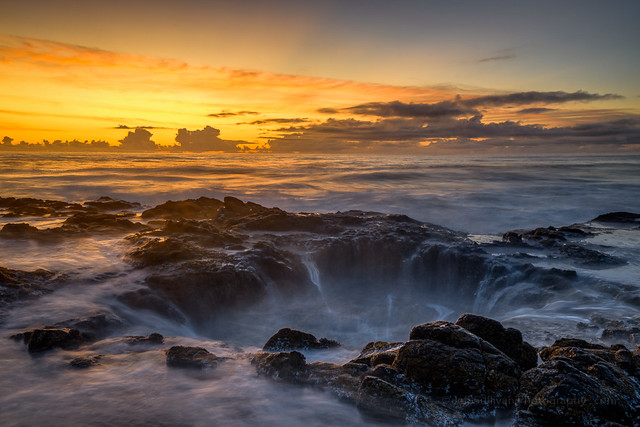
Thor's Well

For some reason Thor's Well seems frequently enough captured that it needs particularly good atmospheric conditions to make it stand out. No doubt I'll revisit the place more to see what else the site delivers in light and conditions. Sometimes there's no place like home, like this winter storm reflected on Topaz Lake:

Topaz Lake Winter Reflection (Black and White)

Prior Years' Images Discovered or Reworked

 Sometimes I can't get to a particular image in the year I captured it, either because I lack a sufficient tool to do it justice, or I simply don't have the time required to work on it. My "new or improved" images from past years included some real stunners, particularly ones re-imagined in black and white:

Geyser Basin and Trees in Morning Sun RaysCalm Before the Storm
Breaking Storm Over The Palisades Galactic Center & Standard Mill

Honors & Recognition


View this post on Instagram
 
Congratulations to @jeffsullivanphotography for winning the recent Your Best Photo of 2018 Assignment with the image, Golden Hour on the Oregon Coast. “Sometimes, the most interesting photos we take are from a new location or from a fresh look at a place that we haven't visited in a long time,” says Sullivan. “In 2018, I took a 2,000-mile road trip to revisit some of my favorite places in Oregon. Although I lived in Oregon for years in the 1980s and revisited a lot in the mid to late 2000s, I hadn’t been to some of these places in years. I had a great time on this latest lap, but even with 2-plus weeks it wasn’t enough time, so I’ll just have to go back soon! “My main exposure here was 1/8th of a second at f/16, ISO 200, and that produced a useful result, but HDR processing in Photomatix provided more shadow detail and highlight color, for a better overall result. The images were adjusted in Adobe Lightroom prior to HDR processing, then additional adjustment was conducted afterward as well.” * * * #OPAssignments #Oregon #landscape_lovers #sky_captures #landscapephotography #fantastic_earth #landscape_captures #ic_landscapes #ig_exquisite #ourplanetdaily #landscape #landscapelovers #instanaturelover #welivetoexplore #allnatureshots #specialshots #landscapestyles #nature_perfection
A post shared by Outdoor Photographer Magazine (@outdoorphotomag) on

Now it’s time to go out and capture another 100+ from 2020! To join me in the pursuit of images like these, check out my workshops listed at the top of the blog on my Web site.

My Favorite Landscape / Travel Photos from Each Year, 2006 – 2018

Here are some of my collections from prior years.  It has been a great 14 years of adventure, I can’t wait to see what I can find to show you in the years to come!

2018 Favorites photo album on Flickr 
2018 Top 10 Landscape/Travel Blog Post

2017 Favorites photo album on Flickr 
2017 Top 10 Landscape/Travel Blog Post

2016 Favorites photo album on Flickr 
2016 Top 10 Landscape/Travel Blog Post

2015 Favorites photo album on Flickr 
2015 Top 10 Landscape / Travel Photos Blog Post

2014 Favorites photo album on Flickr 
2014 Top 10 Landscape / Travel Photos blog post

2013 Favorites photo album on Flickr 
2013 Top 10 Landscape / Travel Photos blog post

2012 Favorites photo album on Flickr 
2012 Top 10 Landscape / Travel Photos blog post

2011 Favorites album on Flickr 
2011 Top 10 Landscape / Travel Photos blog post

2010 Favorites album on Flickr 
2010 Top 10 Landscape / Travel Photos blog post

2009 Favorites photo album on Flickr
2009 Top 10 Landscape / Travel Photos blog post

2008 Favorites photo album on Flickr
2008 Top 10 Landscape / Travel Photos blog post

2007 Favorites photo album on Flickr 
2007 Top 10 Landscape / Travel Photos blog post

2006 Favorites photo album on Flickr
2006 Top 10 Landscape / Travel Photos blog post
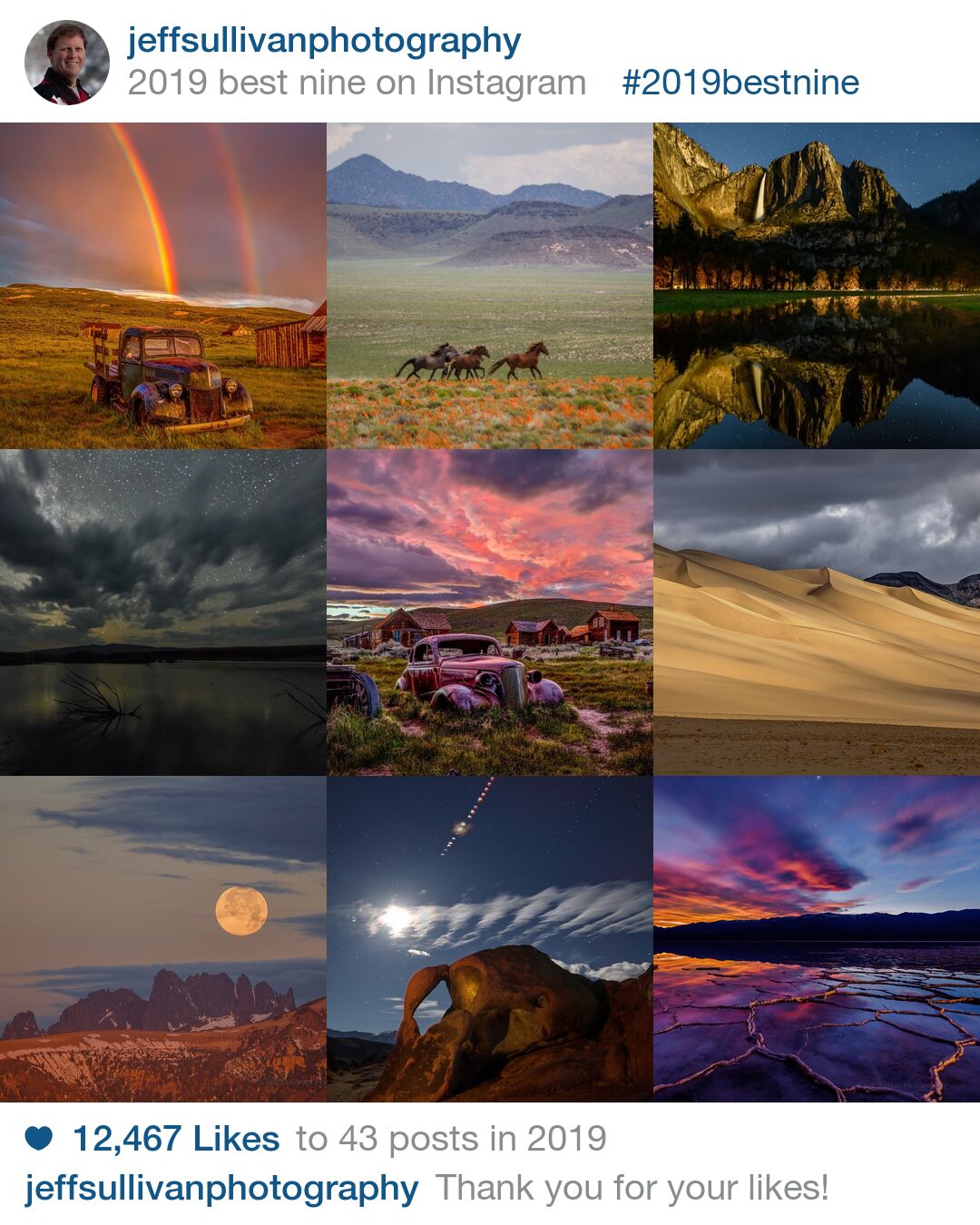
My most popular photos on Instagram in 2019. #bestnine2019[/caption]

Saturday, May 02, 2015

Time-lapse of the Milky Way Rising in the Mojave Desert

In late April I was out camping in the desert, and I set an alarm to get up in the early morning hours to catch the Milky Way rise.  Around 1 am the first bits of it were just rising over the eastern horizon, so I set up two cameras, to catch both static and panning views of it.

The camera on a stationary tripod captured images that I could also process to create star trails images:

See the link to my star trails tutorial below
 Here's the time-lapse video captured on a second camera, using a sky-tracking, panning mount:


Digital Rights Management by Nimia

 Here's the time-lapse video captured on the stationary camera:


Digital Rights Management by Nimia

I set another alarm to wake up near sunrise to stop the time-lapses, and with one of the cameras I captured multiple shots to stitch together a panorama of the Milky Way, now forming a high arc in the sky.

Milky Way Over Joshua Trees, Panorama
It all turned out really well.  I should sleep at work more often!

Here's some introductory information on night photography techniques, in case you want to try yourself:
How to Capture Milky Way Images

Create Star Trails Images


I can show you more advanced techniques as well as these in more detail during night photography workshops in the "ghost town" of Bodie. We have five workshops scheduled in 2015, with dates available from May through October.  Several of the workshops also offer special escorted access into building interiors, which are not generally open to the public:
http://www.jeffsullivanphotography.com/blog/bodie-night-photography-workshops/


P.S. - Thanks in advance for lies, shares, +1s, comments, or any other honors that you choose to bestow on my blog posts!  With my book done, I'm trying to get a lot more active on updates to my blog, so you should see a lot more activity and updates here in the coming weeks and months.  I also have a "new"(er) blog, which I use to consolidate social media posts to: www.JeffSullivanPhotography.com.

Tuesday, April 14, 2015

First Results With a ProtoMachines LED2 Light

Exploring a small slot canyon on a moonlit night
Last month I bought a high end ProtoMachines LED2 light to use for light painting.  It has presets for tungsten and daylight white balance, so I decided to test its ability to light objects at night with cool, warm and neutral light settings.  I also wanted to get a feel for what intensities worked best.  The LED2 can be used in a brightness range of 9 stops of light.  Each stop represents a 2X intensity change, so its brightest setting should be 512X brighter than its dimmest one.

Illuminated landscape under moonlight
One night offered partial moon illumination of roughly 50%, not terribly different from the conditions we'll be shooting under in our upcoming night photography and light painting workshop in the ghost town of Bodie on May 24.  I illuminated the landscape from about 100 feet away from two positions 50 feet to the right and left of the camera, with the light on intensity levels 4 and 5 (on the scale of 9).  I had checked the daylight and tungsten settings and used RGB values between them to have the light be fairly neutral.  I also used the light to explore a short passage between eroded clay walls (image at top), with the light set to its daylight preset for a warmer effect.

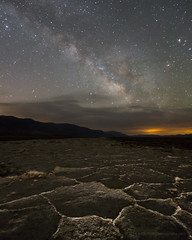
Milky Way Over Badwater Salt Flats
Badwater Salt Flats, Death Valley
I also went out on moonless nights, illuminating the foreground using a neutral white color close to what I expected to be using as a white balance for the rest of the photo.  For the Badwater salt flats I illuminated the foreground from roughly 20 feet to each side.  Due to the darkness of the sky, the sensitivity of my camera settings, and the proximity of the foreground to both the camera and the light, I used intensity levels between 1 and 2.

A point source of light can be though of as sending light in all directions in a sphere.  As you get further away from the source, the sphere is much larger, so the light spreads out over a larger area and gets less bright.  If you consider the geometry and math, you get the Inverse Square Law: the light intensity on the object illuminated is inversely proportional to the square of the distance.


Photographers use the Inverse Square Law when they cut illumination intensity in half by increasing the distance of the light source by 1.4X (the square root of 2).  Similarly you can double the light intensity by reducing the distance to 0.7X.  The ProtoMachines light makes adjustment even easier by adjusting light intensity in stops of light, increments of 2X, so if you want the light twice as bright, you just add 1.0 to the brightness setting. 


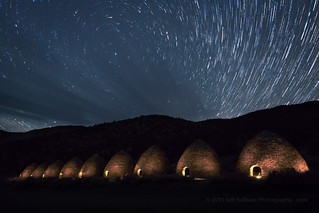
Glowing Kilns at Night
Charcoal kilns at night
While shooting these charcoal kilns I used intensities in the 3 to 4 range, but at that higher intensity I only flashed each kiln for a second or two.  I kept the light on the far side of my body so it wouldn't shop up in the image, and I kept walking so I wouldn't show up in silhouette.  For some reason the light takes on a slight pinkish hue here.  I must have messed up when setting the color.  Since I was shooting dozens of shots in a row, I couldn't review the shot while executing the shot, but I can adjust the white balance in Adobe Lightroom after the fact.

A lot of the early adopters of this type of light use it in more of a "crazy colors" mode, painting objects in a variety of shades.  For this foreground texture I decided to use additive light blending, where you add two colors to make a third.  I used blue and red to see if they'd blend to make purple where they overlap. I tried to send the red light in from the left side, and the blue light up the eroded depression from the right side.  For simplicity I shot the red and blue in separate 30-second exposures, and blended the two images in the free StarStaX app.


Light Blending on the Playa
Light Blending on The Racetrack playa in Death Valley National Park
I was able on this trip to use the light on various subjects, in variety of different modes, on subjects near and far, under various types of skies and lighting conditions. I can't wait get back out and use it some more, to practice for our first Bodie night photography workshop of the season coming up on the night of May 24.

To see other lights I've tried and carry, read my prior post:
Gearing up for 2015 With a ProtoMachines LED2 Lighthttp://activesole.blogspot.com/2015/03/protomachines-led2-bgb-light-white-balance.html

Monday, November 17, 2014

Leonid Meteor Shower: Timelapse HD Video


You should see two big ones top center, then a lot of little ones down near the horizon after that.

Assembled from 224 30 second photos taken last night from 1-3am in the Eastern Sierra, California, during the Leonid meteor shower in 2009.

All I can say now in 2014 is wow, my technique has progressed a lot since 2009!

Catch the Leonid Meteor Shower Nov 17/18!


The Leonid Meteor Shower, one of the best meteor showers of the year, is happening this week, peaking around November 17/18. The meteors appear to originate from the constellation Leo.  The radiant point that the meteors seem to originate from rises slightly north of due east shortly after after 11 pm.

Long, earth-grazing meteors could be visible coming out of the eastern horizon before the radiant point rises. You can download an app such as StarWalk to a smartphone or tablet to make identification of the constellation and radiant point easy. As night progresses the portion of the earth that you're standing on rotates around to the forward path of the planet hurtling through space, where it collides with more space debris.  The path of the earth is due east at midnight, so the sky and atmosphere above you acts like a big scoop collecting meteors and creating long fireball trails.  The eastern half of your sky can collide with slightly more debris at that point, and more and more of the sky above you is directly facing the direction the earth is travelling as dawn approaches.  That's why early morning hours are often advised for meteor shower watching.

For 2014 however the moon will rise around 3 am at mid northern latitudes, so the best viewing will be roughly midnight to 2:30 am. Adjust your shooting direction to accommodate the east to west movement of Leo as it seems to circle the North Star and rises towards nearly overhead and slightly northeast as dawn approaches.

Check the weather forecast and moon rise times in your area to fine tune your viewing experience. To find a prime viewing spot, travel east away from cities to put the light pollution at your back. Good luck!

Tuesday, October 28, 2014

Orionid Meteor Shower Peaks October 21-22!

Orionid Meteor Shower Peaks October 20/21!
An Orionid meteor next to the constellation Orion

The annual Orionid meteor shower is created when Earth passes through trails of comet debris left in space long ago by Halley's Comet as it orbits around the sun. The meteors, or "shooting stars", develop when pieces of rock typically no larger than a pea, and mostly the size of a grain of sand, vaporize in Earth's upper atmosphere.

This is a composite shot of the best meteors that I caught during the Orionid meteor shower in 2014 over the course of several hours in Central Nevada:

Orionid Meteor Shower 2014
I used a star-tracking mount to follow Orion and produce that composite, so when I created a time-lapse from the same footage, it turned out like this:


For a perspective fixed on the ground with the sky moving, here's a time-lapse video from chasing the Orionid meteor shower in 2012 in the Mono Basin in the Eastern Sierra:


In 2014 Liz Horton at +ABC11-WTVD in Raleigh for using this Orionid Meteor shower time-lapse video to inform viewers about the Orionid meteor shower.  Here's ABC11's report informing viewers of the upcoming shower: http://abc11.com/weather/orionid-meteor-shower-visible-tuesday-night-/359788/

My 2015 Orionids photo featuring Venus, Jupiter and Mars has done well  on +Twitter so far:

Where will you pursue this year's Orionids?  In 2015, I suspect that the morning of the 23rd could be good after the moon sets.

Saturday, October 18, 2014

How to Photograph Comet Siding Spring by Mars, October 18-19

Comet C/2013 R1 Lovejoy and a Geminid Meteor, December 2013
Comet Siding Spring will pass Mars tomorrow, Sunday October 19, 2014.  The Orionid meteor shower is also underway, so you might get lucky and catch a meteor as well, like I did with this Geminid meteor I caught with Comet C/2013 R1 Lovejoy last December.

I see that my exposure was 8 seconds at ISO 5000 on a 50mm lens. It was an f/1.4 lens, so I was able to shoot at f/1.6. No star tracking mount was needed for up to a 10 second exposure with that lens.  With that long of an exposure, shouldn't the stars appear to be moving across the sky?  Using the "500 Rule", as long as the focal length times the exposure in seconds doesn't exceed 500, you should be fine.  So 50 x 8 = 400, and you get no visible star movement.

If you try a 400 mm lens however your maximum exposure goes to 1.25 seconds, so you'd need a star tracking mount.  Most people don't have star tracking mounts, so a good compromise might be an 85 mm lens offering f/1.8 or wider, keep the exposure around 5-6 seconds or less, and boost the ISO a bit is necessary.  The comet is approaching Mars now, so try it tonight, Saturday, for practice.

Seen from mid northern latitudes this weekend, Mars will be visible to the southwest from the end of evening twilight until it sets around 9/9:30 pm or so.  Good luck!

I performed lens tests with Comet C/2-013 R1 Lovejoy in 2013. I've put together a time-lapse video today to show you how they did. I've uploaded the video to YouTube here:


http://youtu.be/B-PCqS1KAT8

+NASA Goddard has produced a cool visualization showing how Comet Siding Spring will pass Mars, in this video:

Thursday, July 03, 2014

How to Photograph Fireworks


People often ask me what my settings were for certain night shots, but the light on the landscape and your subject varies from night to night as the moon phase changes, it varies from hour to hour as the moon moves in the sky, and even from moment to moment as your point your camera in different directions and have more or less light pollution in your shot.  So when I pursue night shots, I focus on determining the best exposure, and I remain vigilant to adjust it as conditions change. Normally you have to monitor f-stop, exposure time and ISO, but for fireworks the situation is simplified a bit.  The burning embers have a certain brightness which you can turn up or down adjusting f-stop or ISO, and the exposure time simply controls how long you want the trails of the moving embers to be.  You can determine the time between each shot fired, you can get many complete explosions of color.

Often an exposure time of around 4 seconds works well, but in this case the shots were being fired every 6 seconds, so I left one camera on an intervalometer capturing 5 second exposures at f/16, ISO 640, then triggering the next shot one second later, so they were 6 seconds apart in total. Upon returning, I assembled the resulting shots into a time-lapse video, as described on my blog:

Create a Timelapse Video on Your Digital Camera
http://activesole.blogspot.com/2011/08/photographer-light-dance-pfeiffer-beach.html

For the video sequence it appears that I re-framed the shot a couple of times during the fireworks display.  I've also had been experiencing a bug in Lightroom where a crop from one shot pasted into others does not always take effect correctly, so that may be coming into play as well.
Independence Day fireworks at Crowley Lake in the Eastern Sierra 2013
Google+: Reshared 34 times Google+: View post on Google+

Here are some other fireworks displays I've photographed in the past 5 years:

Bridgeport, California 2012
https://www.flickr.com/search?user_id=23183960%40N00&sort=relevance&text=fireworks%20Bridgeport%202012

South Lake Tahoe, Nevada, 2011 
http://activesole.blogspot.com/2011/08/south-lake-tahoe-fireworks-ranked-6-in.html

Tahoe City, California, 2010 
http://activesole.blogspot.com/2010/07/july-4th-weekend.html

Seaside, Oregon, 2009 
http://activesole.blogspot.com/2009/07/by-rockets-red-glare-bombs-bursting-in.html

Sunday, January 05, 2014

Comet Lovejoy C/2013 R1 1/4/2014 85mm 30fps 1080p HD Time-lapse Video


This video converts 762 individual photos shot at 85mm focal length into 1080p HD video at 30 frames per second. Each photo was cropped to approximately 3840 pixels on the longest side ("4K video"), then they were converted to HD video at 1920 x 1080 resolution (1/4 the original resolution).
This was shot before dawn on January 4, 2014 on a standard tripod (no tracking mount).  Most of the streaks passing through the frame occupy several photos (which have an average exposure time of 2.5 seconds each), so most appear to be satellites.  It was shot less than 24 hours after the peak of the Quadrantid meteor shower though, and Comet Lovejoy isn't all that far in the sky from the radiant point of that shower, so if I hunt through all of the 762 photos I might find a Quadrantid meteor or two.

This blog post is a test of sharing a 1080p HD video from Flickr to Blogger... click on "HD" and the full screen icon in the lower right corner to see it in the highest possible resolution!  It may need to play twice before the player gets it fully buffered for smooth playback.

Monday, November 25, 2013

Yosemite National Park Photo Workshops


I'm working on workshop dates for Yosemite for 2014.  I'll post updates on my new blog when they become available: http://www.jeffsullivanphotography.com/blog/yosemite-national-park-photography-workshops/

Night Reflections in Yosemite ValleyHalf Dome over Sunrise Mist in Yosemite ValleyMoon Rise Behind Half DomeYosemite Falls in WinterStorm Cloud Reflection at Valley ViewHalf Dome, Full Moon
Winter WonderlandA Moment of PeaceThe Day Was Off To A Good StartSunset at Glacier PointSolar Rainbow in Yosemite ValleyRim Fire in Yosemite, 116mm
Fall Morning Mist in Yosemite National ParkBreak in the StormTrees and MistCathedral Beach in WinterYosemite's Rim Fire Under the CloudsFire on a Massive Scale
Under a Starry SkyRim Fire in Yosemite at 85mmYosemite Falls Moonbow Star TrailsValley View in PinkIce and Pollen in Tenaya LakeBridalveil Falls
Yosemite National Park, a set on Flickr.