The formatting of this post got all messed up when i tried to transfer it form my original Wordpress blog post on my Web site here: http://www.jeffsullivanphotography.com/blog/2018/02/08/lunar-eclipse-photography-january-31/
I'll fix it as time permits, which might not be a while, so best if you read it over there for now!
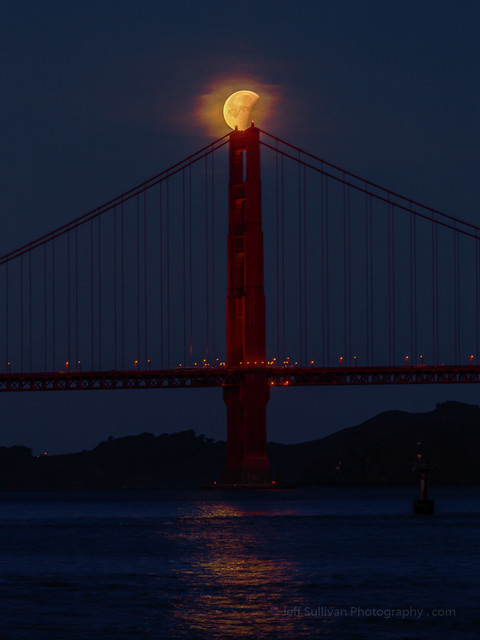
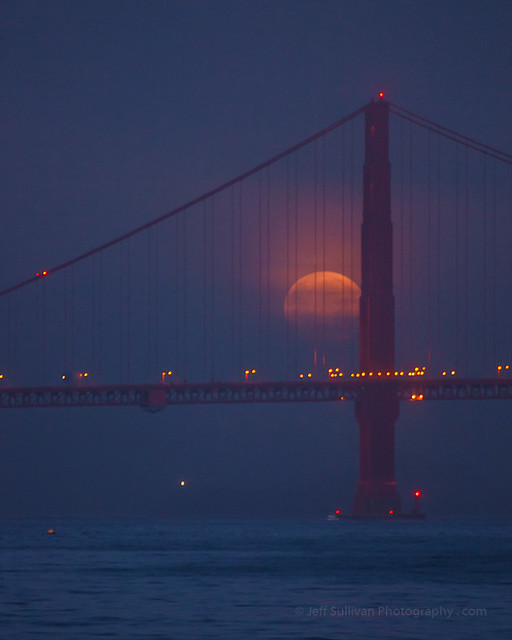
For the January 31, 2018 lunar eclipse, my planning started weeks in advance, looking at the timing of the eclipse, the direction of the moon, and at prior shots like the moon set above from 2010 that seemed like a good concept to re-shoot with a moon in some phase of eclipse. I decided to try to place the moon on top of the South Tower of the bridge, worked out the geometry to estimate the moon's elevation, looked in an app to determine its compass direction at that time, and where I should stand.
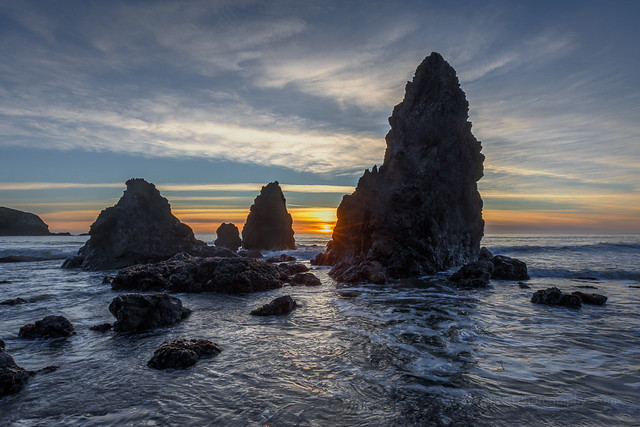
So after you decide to shoot an early morning lunar eclipse, what's the next logical thing to do? Pick a spot for the prior sunset of course. Marin County's Rodeo Beach fit the bill nicely for a relaxing sunset.
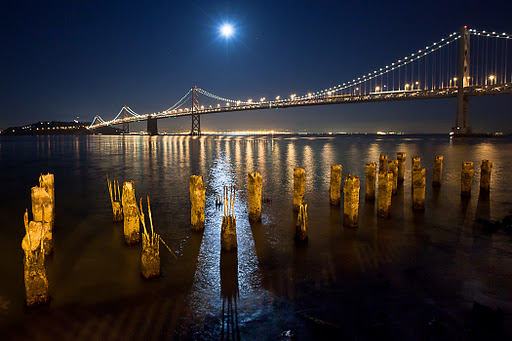
 A trip to Japan Center for sushi later, and it's too early for sleep, so a little night photography along the San Francisco waterfront helps put a few more travel images on the card and burn off a few dinner calories.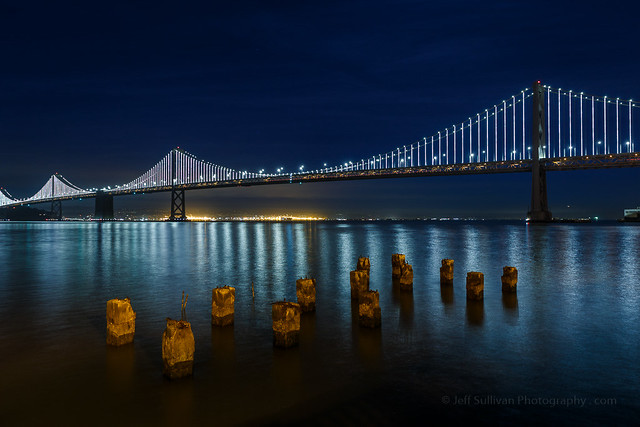
Wake up at 3am, and go get a nice moon shot from the Crissy Field area:
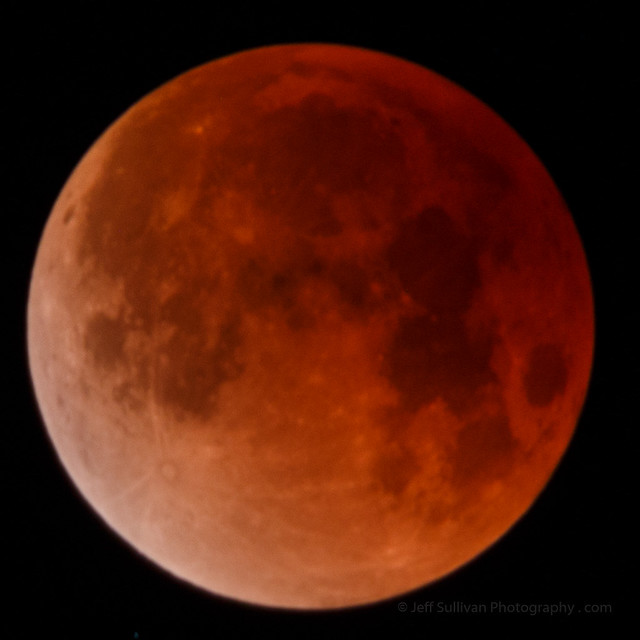
This image was exposed for 15 seconds at f/8, ISO 200 on a Canon EOS 70D with a lens at 381mm using a Canon 70-200mm f/4 IS L Series lens plus EF 2X III teleconverter. After the APS-C crop factor, the equivalent focal length was 610mm! The camera setup was on an iOptron SkyTracker, so the longest exposures in the sequences I was shooting could easily be 15 to 20 seconds at ISO 200. What next? You've chosen the spot anticipating the moon approaching the Golden Gate Bridge, so when it's close enough you can include the bridge in compositions:
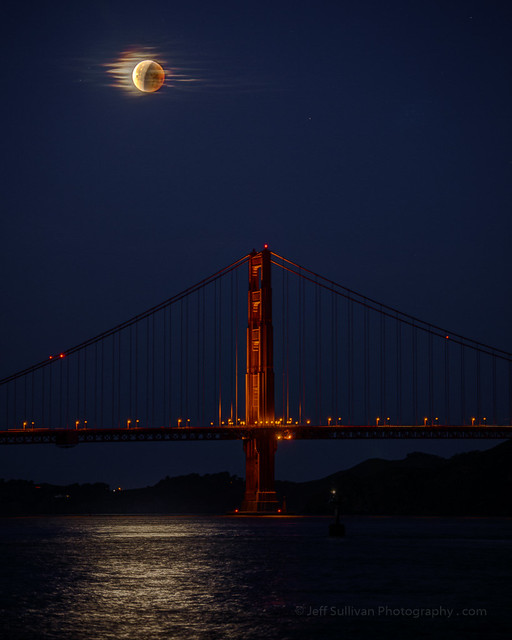
But the real alignment you've calculated from the height of the bridge, the distance to the bridge, and the compass direction is the moon passing the top of the South Tower of the Golden Gate Bridge. But you forgot to subtract out the elevation of your shooting position from the height of the bridge, so the moon is about 1/2 moon width, about 0.25 degrees, too high. So you move about a dozen feet to your left, compose over the shoulders of a couple of photographers, and get the composition that you envisioned weeks earlier:
The recent weather and the forecast called for partly cloudy conditions, and at times there was definitely a thin haze that the moon was shining through, but there was also a challenge that I don't usually have to deal with back home in the high desert: condensation! For a while I had to wipe my lens every few shots to remove it. Astrophotographers sometimes use heaters on their telescopes, photographers shooting on a dewy morning can improvise using gaffer's tape and hand warmers. That's not the end of the fun, as sunset light paints the sky while the moon dropped into the bridge. Fortunately the atmospheric haze also cleared up significantly.
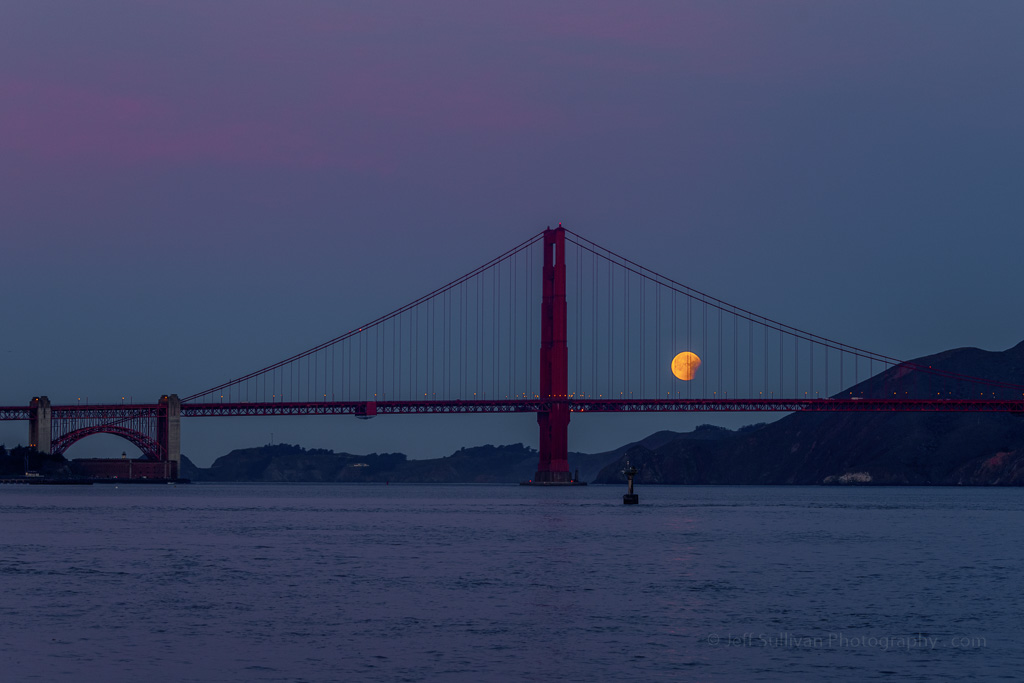
Sunrise approaches as the partially-eclipsed moon sets behind the Golden Gate Bridge.[/caption] As it descends further, while shooting the lunar eclipse through San Francisco's Golden Gate Bridge, for a matter of seconds I decided to try to silhouette a vehicle against the setting, partially-eclipsed moon. A large delivery truck fit the bill nicely. I was shooting at 400mm, so I had to anticipate the movement of the vehicle enough ahead of time to leave mirror lock-up on!
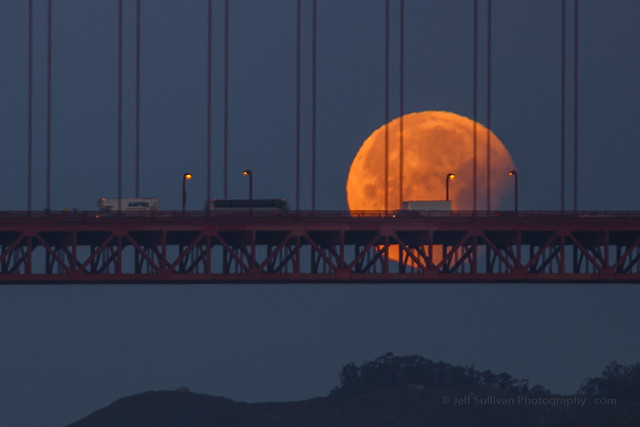
Note the rough edge to the moon. At this high degree of telephoto, on the moon in the lower couple of degrees of elevation when our view of it is through a lot of turbulent air, the view of the moon is visibly distorted. No doubt there will be many faked shots from this eclipse as usual, and a recent article on FStoppers discusses some of the ways you can spot them. So to summarize, anticipating an interesting place to capture the mono alongside earth-bound features using apps like PhotoPills and The Photographer's Ephemeris (TPE) enables the capture of many compositions beyond "Just another lunar eclipse shot"... not that there's anything wrong with that! So once the eclipse is "in the can" (like a reel of exposed movie film), what next? Think of something to shoot while you're in the are, or on your way home! A quick detour to the California Coast, the Mendocino area in this case, fit the bill nicely.
 Astronomical events aren't just opportunities for astrophotography, they are a great excuse to get out. travel, and shoot! The weather can be surprisingly warm along the California Coast in the winter given the heat sink effect of the water and the lower winds compared to summer. Temperatures in the high 50s by noon and walking down Main Street Mendocino, I had to take off and carry my jacket as I became too hot to wear it.